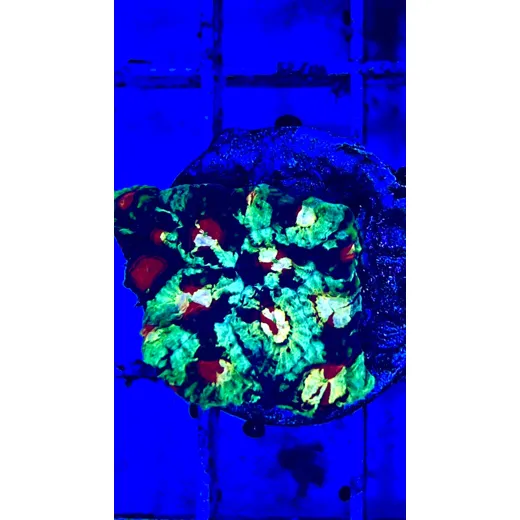
Bleeding Mayan Sun Favia Coral
Introducing the Bleeding Mayan Sun Favia—a stunning addition to any reef aquarium. This compact coral showcases rich crimson and golden hues that intensify under quality lighting, creating a mesmerizing display of natural color variation. The intricate polyp structure of this Favia species reveals delicate patterns that shift and change as the coral feeds and responds to your tank’s environment.
Perfect for intermediate keepers, the Bleeding Mayan Sun thrives in moderate light and flow, making it an excellent choice for mixed reef setups. Its manageable size allows flexible placement while its hardiness builds confidence as your aquascaping skills grow. Watch as vibrant feeding polyps extend throughout the day, adding dynamic movement and personality to your aquascape.
| Specifications |
|---|
| Size: S (0.75″ to 1″ diameter approx) |
| Species: Favia (Bleeding Mayan Sun) |
| Light Requirement: Moderate |
| Flow Requirement: Moderate |
| Best For: Intermediate reef tanks |
FAQ
What lighting conditions does the Bleeding Mayan Sun Favia require?
The Bleeding Mayan Sun Favia thrives under moderate lighting conditions.
Is this coral suitable for beginners?
This coral is best suited for intermediate reef keepers due to its moderate light and flow requirements.
How does the coral respond to changes in the tank environment?
The coral exhibits shifting patterns in its polyps as it feeds and responds to environmental changes in the tank.


Anne Parsons –
The coral has been in my tank for three months and the colors have deepened significantly under my LED lights. The polyps move naturally and add a lot of visual interest. I appreciate its manageable size and ease of placement in a mixed reef setup.
Molly Murray –
It’s a beautiful coral with vibrant red and gold tones. I keep it in moderate flow and it’s been stable since I added it. The color shifts throughout the day, which is very pleasing to watch.
Jan MacDonald –
I was cautious about adding a new coral species, but the Bleeding Mayan Sun has adapted well. It’s hardy and doesn’t seem stressed. The feeding polyps extend regularly, making the tank feel more alive.