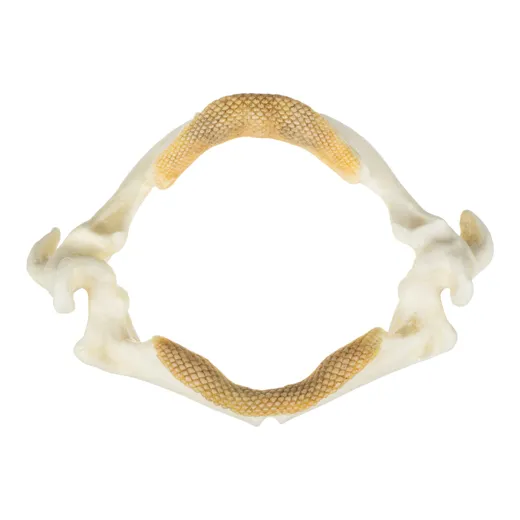
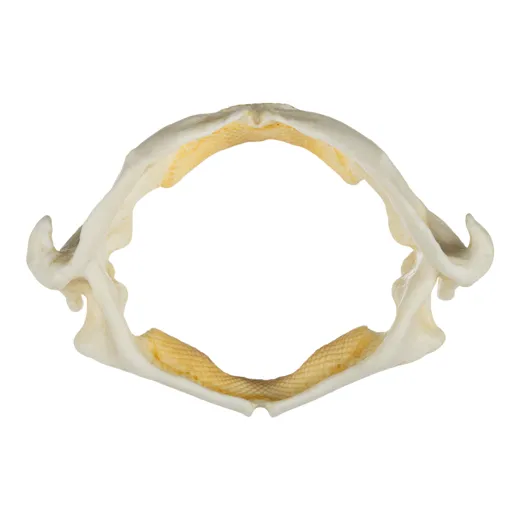
Replica Stingray Jaw
Stingrays, named for their barbed, venomous tail spine, have teeth that enable them to crush and eat invertebrates such as clams, mussels, and oysters. Like its shark relatives, stingray possesses special sensing organs called ampullae of Lorenzini that can sense the natural electrical charges of potential prey and aid in hunting. Stingray species vary in size from small palm-sized specimens to large specimens reaching fourteen feet in length.
Specifications
| Feature | Detail |
|---|---|
| Scale | 1:1 |
| Material | High-quality polyurethane resin cast |
| Jaw Width | 16.3 cm (6.4 in.) |
| Jaw Height | 11 cm (4.3 in.) |
| Jaw Length | 5.5 cm (2.2 in.) |
| Origin | Tropical and Temperate Oceans, Tropical Rivers |
FAQ
What is the material used for the replica stingray jaw?
The replica stingray jaw is made from high-quality polyurethane resin cast.
What are the dimensions of the jaw?
The jaw width is 16.3 cm (6.4 in.), height is 11 cm (4.3 in.), and length is 5.5 cm (2.2 in.).
Where does the stingray species originate from?
The origin of the stingray species is tropical and temperate oceans and tropical rivers.
Leah Howard –
The replica stingray jaw is very detailed and accurately captures the shape and size of a real stingray jaw. It looks realistic and fits well in my marine collection. The material feels sturdy and the finish is smooth.
Ruth Lee –
I ordered this for a display at my home aquarium setup. The jaw is well-made and the proportions are spot-on. It adds a realistic touch to the exhibit. Slightly smaller than expected, but still impressive.
Elizabeth Lambert –
Highly satisfied with the quality and accuracy. The polyurethane resin gives it a natural look and feel. Perfect for educational displays or marine-themed decor.