Square Anthias
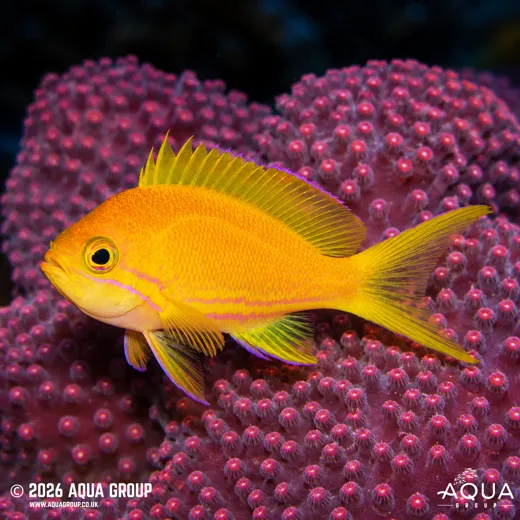
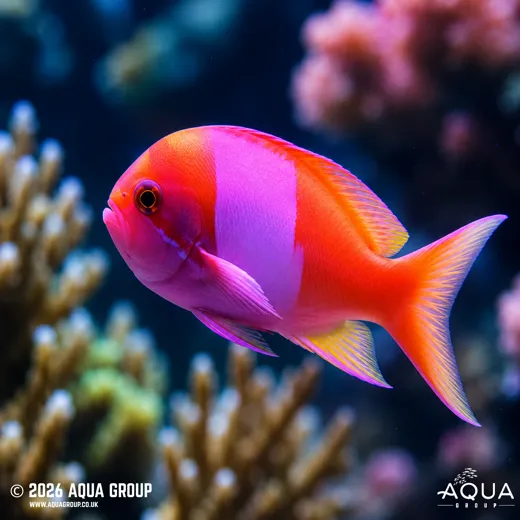
A deepwater anthias, the males display a deep magenta color with a distinctive pale square marking on the flank. Larger than most anthias species, it is spectacular when kept in a group.
Feeding
Planktivore with a fast metabolism. Feed frozen mysis, enriched brine shrimp, and fine marine pellets three to four times daily.
Compatibility
Reef-safe and peaceful. Best kept with one male and several females. Requires calm tankmates and minimal feeding competition.
Behaviour and Personality
Hovers in open water, feeding from the current. If the male dies, the dominant female will change sex to take over.
Before You Buy
Collected from deeper water, so subdued lighting and ample shaded rockwork are recommended to help it settle. Like all anthias, feeding once daily will lead to slow starvation.
| Specs | Details |
|---|---|
| Species | Anthias |
| Sex | Male (with potential sex change) |
| Size | Large for anthias |
| Feeding Frequency | 3–4 times daily |
| Lighting | Subdued |
| Water Conditions | Stable, well-mixed, low flow |
FAQ
Can Square Anthias be kept with other reef fish?
Yes, they are reef-safe and peaceful. However, they require calm tankmates and low feeding competition to thrive.
What should I feed my Square Anthias?
Feed frozen mysis, enriched brine shrimp, and fine marine pellets three to four times daily due to their fast metabolism.
Does the male change sex if it dies?
Yes, if the male dies, the dominant female will change sex to replace him.


Emma Hill –
The Square Anthias is a stunning addition to my reef tank. The male’s magenta color and square marking are very distinctive. I keep one male with three females, and they form a beautiful group. Feeding them three times daily is essential to keep them healthy and active.
Piers Piper –
Great fish with a unique appearance. I was cautious about keeping them due to their feeding needs, but they adapt well with consistent feeding. The tank needs shaded rockwork, which I added, and they settled quickly.
Pippa Churchill –
I was impressed by how calm and peaceful they are. They hover in the open water and feed naturally from the current. The sex change after the male died was unexpected but smooth, and the female took over without issues.