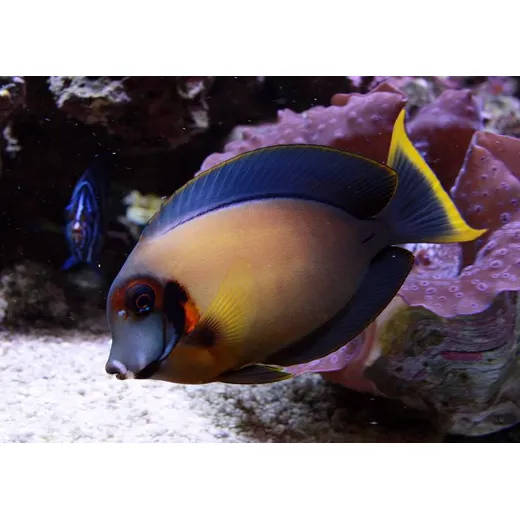
Chocolate Tang (Yellow Mimic when Juvenile) – Size M (3″ to 4″)
Acanthurus pyroferus
Reef Compatible: Yes
Care Level: Intermediate
Disposition: Semi-aggressive
Min. Tank Size: 50 gallons
Mature Size: 10 inches
Specifications
| Feature | Detail |
|---|---|
| Species | Acanthurus pyroferus |
| Size (Adult) | 10 inches |
| Size (Juvenile) | 3″ to 4″ |
| Reef Compatibility | Yes |
| Aggression Level | Semi-aggressive |
| Minimum Tank Size | 50 gallons |
FAQ
Is the Chocolate Tang suitable for a reef tank?
Yes, the Chocolate Tang is reef compatible and can coexist with coral and other reef-safe fish.
What is the expected growth size of this fish?
The mature size of the Chocolate Tang is approximately 10 inches. Juveniles grow from 3 to 4 inches.
Is this fish aggressive toward other fish?
The Chocolate Tang is semi-aggressive and may display territorial behavior, especially during feeding or when defending space.
Simon Glover –
Bought this Chocolate Tang for my 55-gallon reef tank. It’s been two months and it’s active and healthy. The coloration is vibrant and it doesn’t seem to bother the other fish. Good choice for intermediate reef keepers.
Sally Graham –
The fish arrived in good condition and has adapted well. It’s not overly aggressive, but does defend its space when needed. I appreciate the clear description of its behavior and size.
Mary Paige –
Perfect addition to my reef setup. It’s colorful, active, and doesn’t damage corals. The juvenile phase is quite different from the adult, which is a nice detail to know.