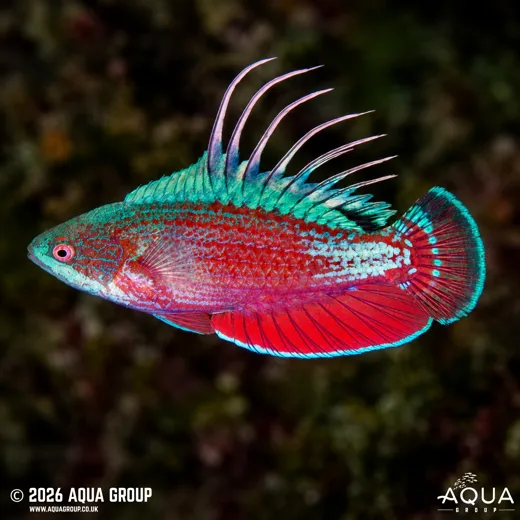
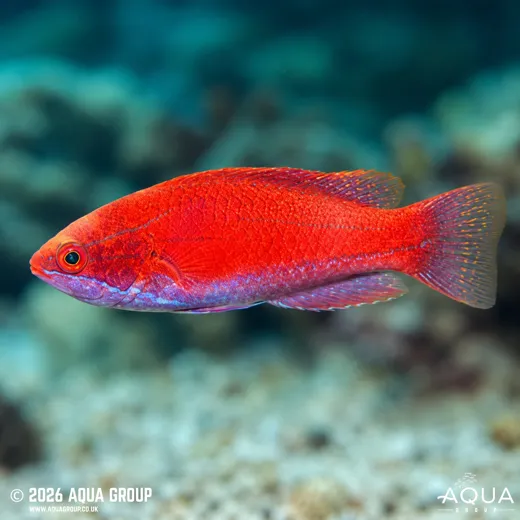
Scarlet-Fin Flasher Wrasse (Paracheilinus lineopunctatus)
The Scarlet-Fin Flasher Wrasse, Paracheilinus lineopunctatus, is a colourful, active and reef-safe marine wrasse known for its red to orange body tones, fine spotted line markings and vivid display colours in mature males. Also known as the Spot-lined Flasher Wrasse, Linespot Flasher Wrasse or Dot Dash Flasher Wrasse, this Western Pacific species is a lively planktivorous wrasse for peaceful reef aquariums. It is generally gentle, coral safe and full of movement, but it needs a secure lid, regular small feeds and calm tank mates to show its best colour and behaviour.
Key Features
- Colourful red to orange body with fine spotted line markings
- Active and reef-safe behaviour
- Planktivorous diet, feeds on small plankton
- Best displayed in a well-maintained reef aquarium with calm tank mates
Specifications
| Feature | Detail |
|---|---|
| Scientific Name | Paracheilinus lineopunctatus |
| Common Names | Scarlet-Fin Flasher Wrasse, Spot-lined Flasher Wrasse, Linespot Flasher Wrasse, Line-spot Flasher Wrasse |
| Origin | Western Pacific |
| Size (adult) | Up to 6 inches |
| Feeding Type | Planktivorous |
| Temperament | Gentle, coral-safe |
| Water Conditions | Salinity: 1.020–1.025, Temperature: 75–82°F, pH: 8.1–8.4 |
FAQ
What is the typical size of a Scarlet-Fin Flasher Wrasse when mature?
The adult size of a Scarlet-Fin Flasher Wrasse typically reaches up to 6 inches.
Is this wrasse compatible with other reef fish?
Yes, it is generally gentle and coral-safe, making it suitable for peaceful reef aquariums with calm tank mates.
What kind of diet does the Scarlet-Fin Flasher Wrasse require?
It is a planktivorous wrasse and requires regular small feeds of planktonic foods such as brine shrimp, copepods, or specialized marine flakes.
Gavin Wilkins –
The Flasher Wrasse has been a highlight in my 55-gallon reef tank. It’s very active and shows vibrant colors when fed regularly. I keep it with other peaceful fish and it doesn’t bother them. Only needs small daily feedings and a secure lid to prevent escape.
Claire Turner –
Great addition to my reef setup. The spotted lines are very visible and the fish moves around a lot, adding energy to the tank. I’ve noticed it’s more colorful after consistent feeding with copepods.
Stephen Carr –
I’ve had this wrasse for six months and it’s still healthy and active. It doesn’t eat aggressively and stays near the mid-levels of the tank. I appreciate how reef-safe it is and how it doesn’t damage corals.