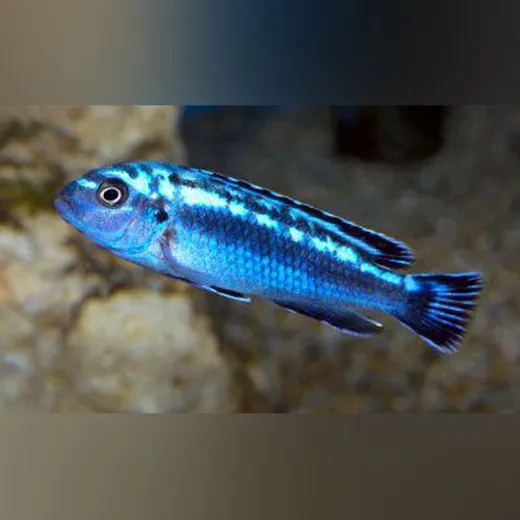
Maingano Electric Blue Cichlid
The Maingano Electric Blue Cichlid is a popular species of cichlid fish that is native to Lake Malawi in East Africa. They are known for their striking electric blue color and aggressive personalities, making them a popular choice for experienced aquarium hobbyists. Maingano Electric Blue Cichlids are social and active fish that require a large tank with plenty of hiding places and plenty of open swimming space.
Key Details
| Scientific Name | Melanochromis cyaneorhabdos |
|---|---|
| Origin | Lake Malawi, East Africa |
| Lifespan | 8-10 years |
| Maximum Size | 5 inches |
| Diet | Omnivorous – accepts flake food, frozen food, live food, and vegetables |
FAQ
What is the ideal tank size for a Maingano Electric Blue Cichlid?
A large tank with at least 50 gallons is recommended to provide enough open swimming space and hiding spots for this active and social fish.
Are Maingano Electric Blue Cichlids compatible with other fish species?
They are not suitable for community tanks with small or passive fish due to their aggressive nature. They should be kept with similarly sized, active cichlids of the same species or compatible Malawian cichlid varieties.
What kind of diet do Maingano Electric Blue Cichlids prefer?
They are omnivorous and will accept a variety of foods including high-quality flake food, frozen foods, live foods, and vegetable matter such as blanched spinach or zucchini.
Virginia Roberts –
The fish arrived healthy and vibrant. After setting up a 75-gallon tank with plenty of rocks and caves, they became very active and colorful. Only kept them with other cichlids of similar size and temperament. Feeding them a mix of flakes and frozen foods keeps them happy and well-fed.
Neil Lyman –
Great color and energy level. They need a lot of space and a well-maintained environment. I had to adjust my tank layout to include hiding spots. They’re not for beginners, but once you get the setup right, they’re a rewarding addition.
Cameron Knox –
The blue color is stunning and stands out in the tank. I’ve kept them for over a year now and they’re still active and eating well. I feed them a varied diet including frozen bloodworms and vegetable-based foods.