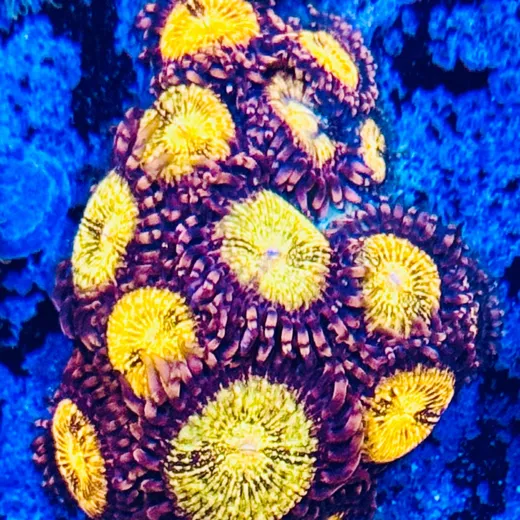
Fairy Dust Zoas
To care for zoanthids, maintain stable water parameters (temperature: 75–80°F or 24–27°C; salinity: 1.023–1.025; pH: 8.1–8.4) and provide moderate lighting and flow.
Always wear protective gloves and eye protection when handling them, as they can release a dangerous toxin called palytoxin.
Nutrients
Aim for a slight nutrient level (Nitrate: 2-15 ppm, Phosphate: 0.03-0.1 ppm) for growth, but avoid ultra-low levels.
Lighting
Modere to high intensity with a spectrum leaning towards blues is often ideal for fluorescence. Acclimate them slowly to new lighting conditions to prevent bleaching.
Flow
Provide moderate, indirect flow that causes gentle swaying without flattening the polyps. Aim for a 10-20x tank turnover per hour.
| Parameter | Recommended Range |
|---|---|
| Temperature | 75–80°F (24–27°C) |
| Salinity | 1.023–1.025 |
| pH | 8.1–8.4 |
| Nitrate | 2–15 ppm |
| Phosphate | 0.03–0.1 ppm |
| Light Intensity | Modere to high (blue spectrum) |
| Flow Rate | 10–20x tank turnover per hour |
FAQ
What precautions should I take when handling Fairy Dust Zoas?
Always wear protective gloves and eye protection when handling them, as they can release a dangerous toxin called palytoxin.
What is the ideal lighting condition for Fairy Dust Zoas?
Moderate to high intensity with a spectrum leaning towards blues is often ideal for fluorescence. Acclimate them slowly to new lighting conditions to prevent bleaching.
What flow rate should I provide for these zoas?
Provide moderate, indirect flow that causes gentle swaying without flattening the polyps. Aim for a 10–20x tank turnover per hour.
Joanne Underwood –
The Fairy Dust Zoas have been thriving in my reef tank for three months. I adjusted the lighting to blue spectrum and maintained stable water parameters. They show vibrant fluorescence and are active during the day. I always wear gloves when handling them, which is a good safety practice.
Audrey Fraser –
I found the zoas to be quite sensitive to sudden changes in lighting. I acclimated them slowly and now they’re doing well. The flow is just right—no flattening of polyps. Water parameters are stable, and they look healthy.
Caroline Lawrence –
After following the recommended parameters, the zoas have grown steadily. I keep nitrate and phosphate within the suggested range. The blue lighting enhances their color, and they sway gently in the current. Very satisfied with the performance.