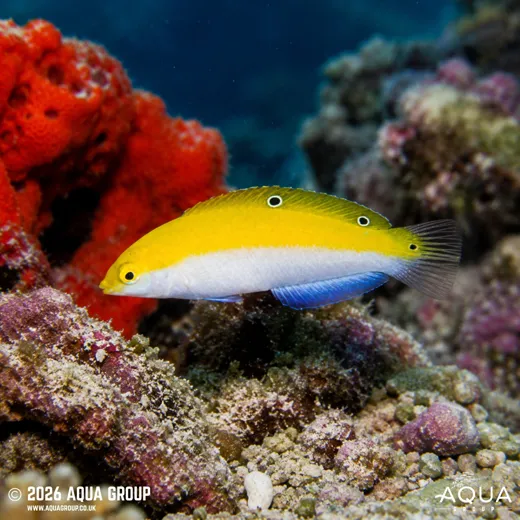
Silver Belly Wrasse (Halichoeres leucoxanthus)
The Silver Belly Wrasse, Halichoeres leucoxanthus, is a bright, active and useful marine wrasse, admired for its vivid yellow upper body, clean white to silver underside and constant foraging behaviour. Also known as the Canarytop Wrasse, White Belly Wrasse or Lemon Meringue Wrasse, this species is a colourful addition to mature reef aquariums and can help hunt small pests within the rockwork and substrate. It is generally peaceful once settled, but should be treated as reef safe with caution due to its appetite for tiny worms, small crustaceans and some ornamental invertebrates.
Common Names
- Silver Belly Wrasse
- Canarytop Wrasse
- White Belly Wrasse
- Whitebelly Wrasse
- Lemon Meringue Wrasse
Key Features
- Vivid yellow upper body
- White to silver underside
- Active foraging behaviour
- Helps control small invertebrates in reef tanks
- Peaceful once established
| Species | Halichoeres leucoxanthus |
|---|---|
| Common Names | Silver Belly Wrasse, Canarytop Wrasse, White Belly Wrasse, Whitebelly Wrasse, Lemon Meringue Wrasse |
| Reef Compatibility | Reef-safe with caution |
| Behaviour | Active, foraging, generally peaceful after acclimation |
FAQ
Is the Silver Belly Wrasse suitable for a reef aquarium?
The Silver Belly Wrasse can be kept in a reef aquarium, but it should be introduced with caution due to its appetite for small crustaceans and worms. It is generally peaceful once settled, but may pose a threat to small invertebrates.
What does the Silver Belly Wrasse eat?
This wrasse feeds on small crustaceans, tiny worms, and other microorganisms found in the substrate and rockwork. It is a natural forager and helps maintain cleanliness in the tank.
How long does it take for a Silver Belly Wrasse to become settled and peaceful?
It typically takes several weeks for a Silver Belly Wrasse to adjust to a new tank environment and become calm and peaceful. Providing stable water conditions and hiding places helps with acclimation.


Kylie Hamilton –
Added the Silver Belly Wrasse to my 120-gallon reef tank last month. It’s very active and keeps cleaning the sand bed. The yellow and silver coloration is striking. I’ve noticed it eating small copepods and amphipods, which helps reduce pests. It’s not aggressive, just curious and busy. Good addition to a mature reef setup.
Neil Quinn –
The wrasse arrived healthy and has been active since setup. It forages through the rockwork and seems to enjoy the environment. I’ve had to monitor it closely to ensure it doesn’t eat my small snails. Overall, it’s a vibrant and useful fish for a reef tank.
Sarah Berry –
This wrasse has become a regular part of my tank’s ecosystem. Its bright colors stand out, and it helps keep the substrate clean. I appreciate its peaceful nature once it settles. Just make sure to provide plenty of hiding spots and avoid placing it with very small invertebrates.