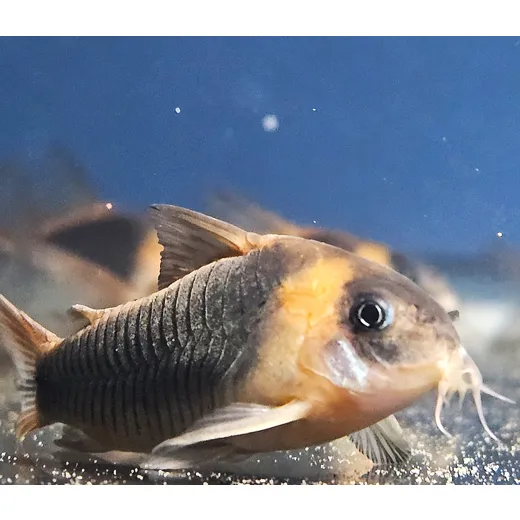
Common Name
Horseman’s Cory, Orange Stripe Cory
Scientific name, Osteogaster eques | Synonym, Corydoras eques
Locality type, Anori, Amazonas State, Brazil
Origin and Habitat
Collected specifically from Anori in the central Amazon. This is warm, tea tinted water with very low hardness and gentle current along shaded banks. The fish work pale sand and fine leaf litter under overhanging roots and branches where micro foods settle. Water is clear to amber through the season, and oxygen is high where shore vegetation and subtle flow meet.
Temperature and Water Conditions
Preferred range is 74 to 80 F, which is 23 to 27 C.
| Parameter | Value |
|---|---|
| Temperature | 74–80°F (23–27°C) |
| Water Hardness | Very low |
| Water Type | Warm, tea-tinted, low hardness |
| Current | Gentle |
| Substrate | Pale sand, fine leaf litter |
FAQ
What is the natural habitat of the Horseman’s Cory?
The Horseman’s Cory is native to Anori in the central Amazon, where it lives in warm, tea-tinted water with very low hardness and gentle current. It is found under overhanging roots and branches, working in pale sand and fine leaf litter where micro foods settle.
What is the ideal water temperature for this species?
The ideal temperature range is 74 to 80°F (23 to 27°C).
What kind of substrate and environment do they prefer?
They prefer pale sand and fine leaf litter, often found under overhanging roots and branches in shaded areas with gentle water flow.

Piers Jackson –
The Horseman’s Cory is a beautiful and active fish. It thrives in a well-maintained tank with soft, sandy substrate and plenty of plant cover. It’s peaceful and enjoys the gentle flow. After a few weeks, it started foraging naturally in the sand, which is a great sign of good water conditions.
Dylan Anderson –
I kept this fish in a 10-gallon tank with low water hardness and a gentle current. It adapted well and shows interest in the leaf litter. The orange stripe is very noticeable and adds a nice color to the community. Needs a stable environment but is not aggressive.
Caroline Robertson –
This species is a delight to watch. It moves slowly through the sand and interacts with the substrate naturally. I’ve kept it for over three months and it remains healthy and active. The water parameters must be stable, but once set up correctly, it’s a rewarding addition.