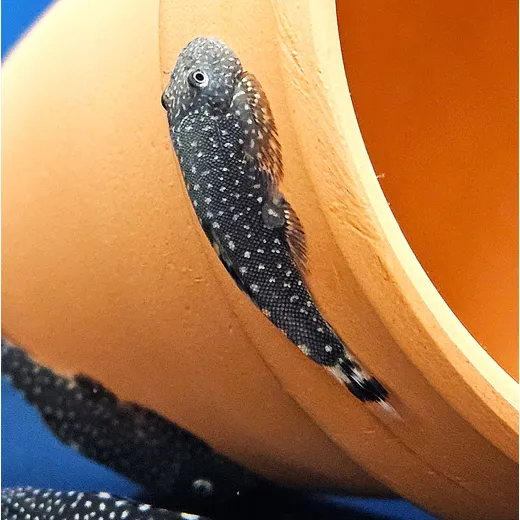
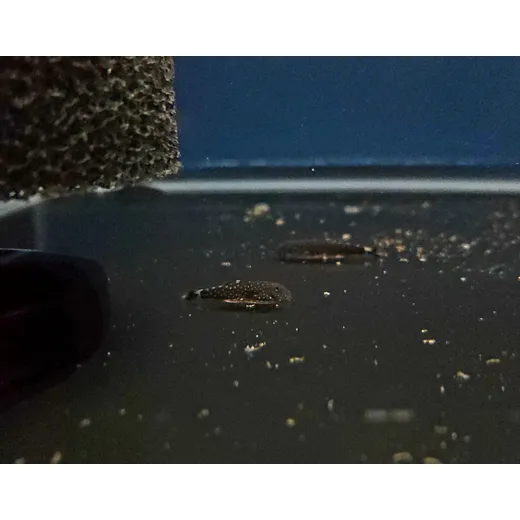
Common Name
Spiney-headed Hillstream Loach, Blue Tail Polka Dot Hillstream Loach
Origin and Habitat
Native to Borneo, this species thrives in clear, cool forest streams that rush over rounded stones and bedrock. Water is highly oxygenated, flow is strong, and substrates are a mix of larger gravel, cobble, and flat stones with pockets of sand. The rock faces grow a living carpet of diatoms, green film, and micro invertebrates. These fish cling to stone, graze in riffles, and slip into cracks when startled.
Temperature and Water Conditions
Preferred temperature is 68 to 75 F, which is 20 to 24 C. Keep pH near neutral with low to moderate hardness. Stable conditions are far more important than chasing a single number, except for specific breeding projects.
| Parameter | Range |
|---|---|
| Temperature | 68–75°F (20–24°C) |
| pH | Neutral (6.5–7.5) |
| Water Hardness | Low to moderate |
| Flow | Strong current |
| Substrate | Gravel, cobble, flat stones, sand pockets |
FAQ
What kind of tank setup is best for this loach?
A well-filtered tank with strong water flow and a rocky substrate is ideal. Include smooth stones and crevices for hiding, and ensure the water is well-oxygenated.
Can this loach be kept with other fish?
It is best kept with peaceful, non-aggressive species that can tolerate strong current. Avoid fish that may nip at the fins or compete for space.
How active is this species?
This loach is quite active and prefers to move along rocks and in current. It will often graze on algae and microorganisms found on stone surfaces.

Deirdre Campbell –
The loach is very active and enjoys the flow of the tank. It spends most of its time on the rocks, grazing on the algae. Very easy to care for once the water parameters are stable. A great addition to a well-maintained stream tank.
Rachel Burgess –
It’s a bit shy at first but settles in quickly. I love how it moves through the rocks and interacts with the diatom film. Needs a strong filter and good water flow, which I already had.
Isaac Dickens –
Perfect for a flowing aquarium. The blue tail pattern is striking and it’s very curious. It doesn’t eat much but does graze on the rocks. Very healthy and active after a few weeks.