Common Name
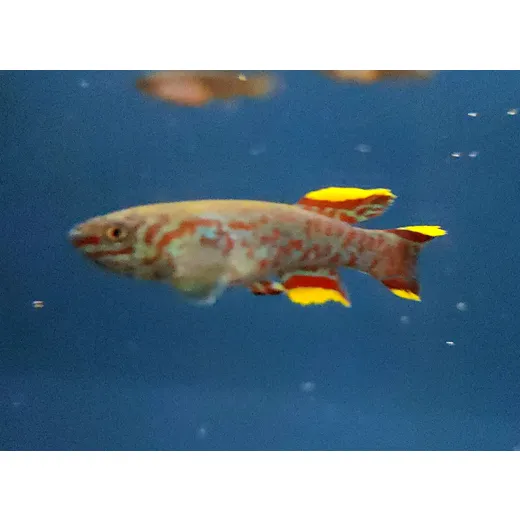
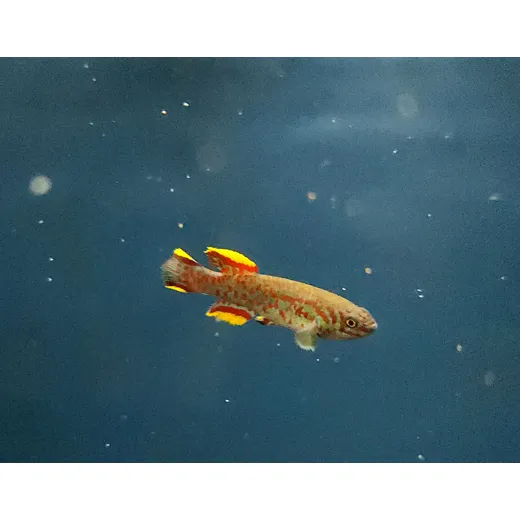
Blue Lyretail Killifish – Akure locality
Scientific Name
Fundulopanchax gardneri (Akure locality)
Note: Older literature may list “clauseni”; modern hobby usage treats Akure as a distinct locality within the gardneri group. Keep lines labeled “Akure” and do not mix with other gardneri forms.
Origin and Habitat
Native to southern Nigeria and western Cameroon. The Akure population comes from small, shaded forest streams and seepage channels around Akure, Ondo State, southwestern Nigeria. Habitats feature leaf litter, palm roots, fallen wood, fine sand, and mossy patches. Water is soft, mildly acidic, tannin-stained, with very gentle flow and high oxygen along plant roots. Seasonal rains create temporary grassy puddles; dry periods occur during the dry season.
Water Conditions
| Parameter | Range |
|---|---|
| Temperature | 22–26°C |
| PH | 5.5–6.5 |
| Water Hardness | 1–5 dGH |
| Flow | Very gentle |
Breeding
These fish are known for their seasonal breeding behavior, typically occurring during the rainy season when temporary pools form. Spawning happens in shallow, vegetated areas with fine substrates. The eggs are adhesive and laid on plant surfaces or on the substrate.
FAQ
What is the difference between Akure and other Fundulopanchax gardneri forms?
Akure is a distinct locality within the gardneri group, recognized in modern aquarium hobby usage. It has unique coloration and behavior. Older references may list it as clauseni, but Akure should be kept separate from other forms to maintain genetic integrity and proper care.
What kind of substrate and plants are best for Akure Blue Lyretail Killifish?
Fine sand, leaf litter, palm roots, and fallen wood are ideal. Include soft-leaved plants like Java moss or Anubias to mimic natural habitat. Provide mossy patches and root zones for oxygen and hiding.
Do these fish require a specific water chemistry to thrive?
Yes. They prefer soft, slightly acidic water with a pH between 5.5 and 6.5, low hardness, and tannin-stained water. Avoid hard water or high alkalinity conditions.
Joseph Black –
The Akure Blue Lyretail Killifish are vibrant and active. They thrive in a well-mimicked natural setup with soft water and leaf litter. The coloration is striking, especially in the tail. Easy to care for once the water parameters are set correctly. Great for a small community tank.
Justin Gibson –
These fish are beautiful and show off their blue tails well. I kept them in a 10-gallon tank with Java moss and fine sand. They don’t require much space and are peaceful. Only need occasional water changes. A good choice for beginners interested in livebearers.
Nicholas Hughes –
I noticed a clear difference between Akure and other killifish forms. The body color and tail movement are more defined. They breed during the rainy season, and the eggs stick to plants. Very rewarding to watch.