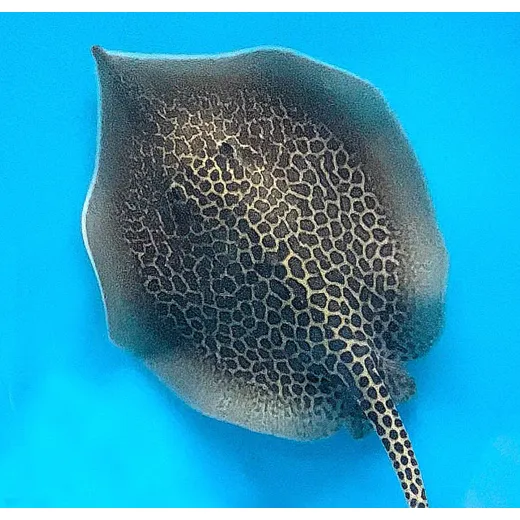
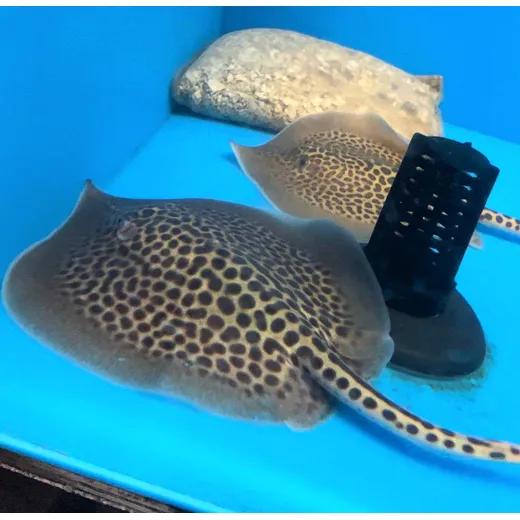
Marble Whiptail Stingray — Fluvitrygon oxyrhynchus
Long tail. River stealth.
The Marble Whiptail Stingray is a rare Southeast Asian freshwater ray known for its elongated snout and exceptionally long, whip-like tail. Its disc displays soft marbled tones ranging from sandy beige to warm brown, often with subtle mottling that provides natural camouflage over fine substrate. Unlike bold-spotted South American rays, this species carries a more understated, river-worn aesthetic — refined and stealthy.
Native to large river systems in Thailand and surrounding regions, Fluvitrygon oxyrhynchus is adapted to sandy bottoms and moderate flow. It spends much of its time gliding smoothly along the substrate, partially burying itself when resting. The ex
FAQ
What is the typical habitat of the Marble Whiptail Stingray?
The Marble Whiptail Stingray is native to large river systems in Thailand and surrounding regions, where it thrives in areas with sandy bottoms and moderate water flow.
How does the Marble Whiptail Stingray move and behave in its environment?
It glides smoothly along the substrate, often partially burying itself when at rest. Its long, whip-like tail allows for graceful, fluid movement through the water.
What are the distinguishing features of this species?
It has an elongated snout, a long whip-like tail, and a soft marbled coloration ranging from sandy beige to warm brown with subtle mottling for natural camouflage.

Ella Hudson –
The stingray looks very natural in the tank. It moves slowly and gracefully, almost like it’s gliding. The coloration blends well with the sand substrate. It’s a peaceful addition to the community tank.
Kylie Young –
I was drawn to this species for its unique appearance. It’s not flashy, but it’s calm and interesting to watch. The marbled pattern is subtle but beautiful. Needs a sandy bottom to feel comfortable.
Una Mathis –
Great choice for a quiet, natural-looking freshwater display. It stays near the bottom and doesn’t disturb other fish. The tail movement is smooth and elegant.