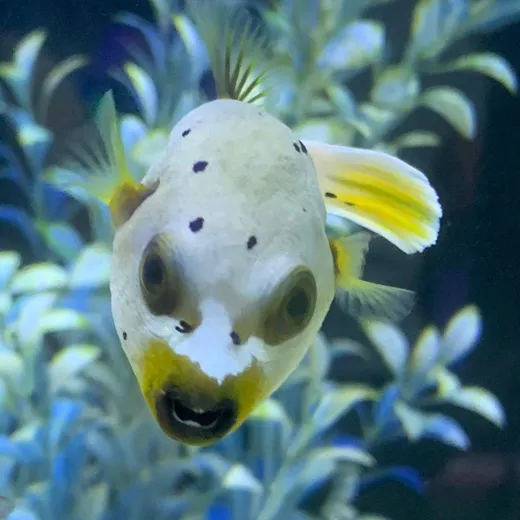
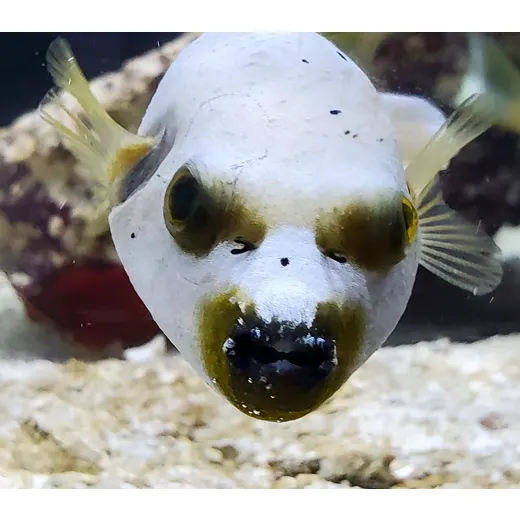
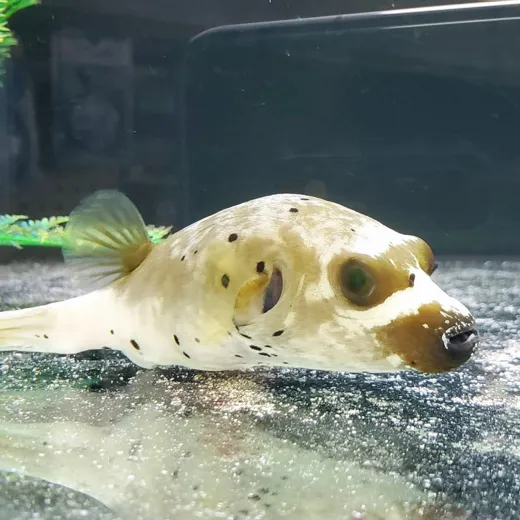
Dog Face Puffer (Arothron nigropunctatus)
The Dog Face Puffer is a semi-aggressive fish that is not suitable for reef tanks. It will consume invertebrates and requires a large aquarium of at least 72+ gallons (180+ liters) when fully grown. The tank should provide ample swimming space and include a reliable protein skimmer to manage nutrient levels.
This species can inflate its body when threatened or frightened. It is essential to transfer the puffer from the shipping bag to the aquarium or acclimation container while submerged, using a bag or container rather than a net. Inflating the fish with air instead of water can pose health risks.
The diet should consist of meaty foods such as krill, squid, clams, and hard-shelled shrimp to support dental health. The maximum adult size is approximately 13 inches.
| Size | Details |
|---|---|
| Adult Size | Up to 13 inches |
| Shipping Size | 2″ – 4″ |
| Minimum Tank Size | 72+ gallons (180+ liters) |
| Compatibility | Not reef compatible |
FAQ
Can the Dog Face Puffer be kept in a reef tank?
No, the Dog Face Puffer is not reef compatible and will eat invertebrates.
How should I acclimate the puffer to the new tank?
Transfer the puffer from the bag to the aquarium or acclimation container while submerged, using a bag or container instead of a net to avoid air inflation.
What kind of food does the Dog Face Puffer require?
A diet of meaty foods such as krill, squid, clams, and hard-shelled shrimp is recommended to help wear down its teeth.
Nicholas Avery –
The Dog Face Puffer is a striking fish with a unique appearance. After setting up a 100-gallon tank with proper filtration and a protein skimmer, it adapted well. I feed it squid and clams regularly. It stays active and shows no aggression toward other fish, though it does inflate when startled. The shipping was smooth and the fish arrived healthy.
Madeleine Sharp –
I followed the acclimation instructions carefully and transferred the puffer while submerged. It has been in the tank for three months and is thriving. The tank needs to be large, but once set up, it’s a fascinating addition. I avoid feeding it anything soft; it prefers meaty foods like krill and shrimp.
Steven Chapman –
The fish arrived in good condition. I made sure to use a container during transfer and kept it in a separate acclimation tank. It has been active and seems to eat well on squid and clams. I’m still monitoring its behavior, as it does inflate when nervous. The tank size is larger than expected, but it’s worth it for the visual appeal.