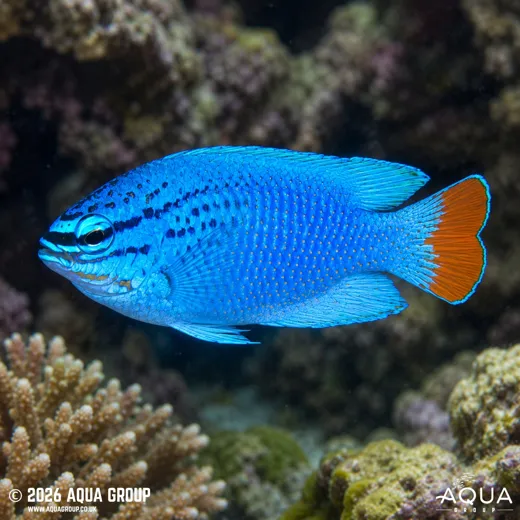
Orange Tail Blue Damsel (Chrysiptera cyanea)
The Orange Tail Blue Damsel is a bright, hardy and highly active marine damselfish, prized for its vivid electric-blue colour and bold reef behaviour. Mature males may develop yellow to orange colouration on the tail and snout, while females and juveniles are usually mostly blue and may show a small dark spot near the rear of the dorsal fin. Also known as the Blue Damselfish, Blue Demoiselle or Sapphire Devil, this species is extremely colourful and durable, but it can become territorial once established, so it should be stocked carefully.
Common Name:
Blue Devil Damsel. Also commonly referred to as the Blue Devil Damselfish, Blue Damselfish, Blue Demoiselle, Sapphire Devil, Sky-Blue Damsel or Orange Tail Blue Damsel.
| Species | Chrysiptera cyanea |
|---|---|
| Common Names | Blue Devil Damsel, Blue Damselfish, Blue Demoiselle, Sapphire Devil, Sky-Blue Damsel |
| Colouration | Males: electric blue with yellow to orange tail and snout; Females and juveniles: mostly blue with small dark spot near dorsal fin |
| Behaviour | Active, territorial once established; suitable for reef tanks with careful stocking |
FAQ
What is the typical colouration of the Orange Tail Blue Damsel?
Mature males develop yellow to orange colouration on the tail and snout, while females and juveniles are mostly blue with a small dark spot near the rear of the dorsal fin.
Is this fish suitable for a reef tank?
Yes, it is suitable for reef tanks but should be stocked carefully due to its territorial behaviour once established.
How does the fish behave in a group?
The Orange Tail Blue Damsel is highly active and can become territorial once settled. It is best kept in a group with compatible species and sufficient space.




Simon Arnold –
The Blue Damsel adds a lot of visual interest to my reef tank. The colour is vibrant and it’s very active. I had to be careful with placement to avoid conflicts with other fish, but overall it’s a great addition.
Anna Duncan –
Beautiful fish with strong colours. The male developed orange on his tail after a few months. I keep it with other peaceful reef fish and it’s not aggressive as long as there’s enough space.
Christopher Bond –
Highly recommended for reef enthusiasts. The blue colour stands out in the tank. It’s hardy and stays healthy even in a busy environment. Just make sure to avoid keeping it with very small or shy fish.