Five-Banded Barbs
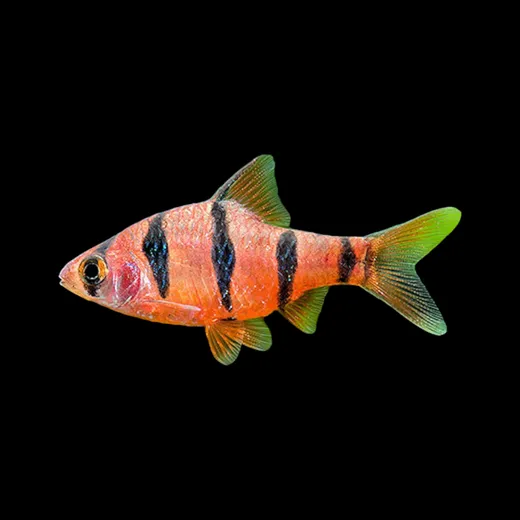
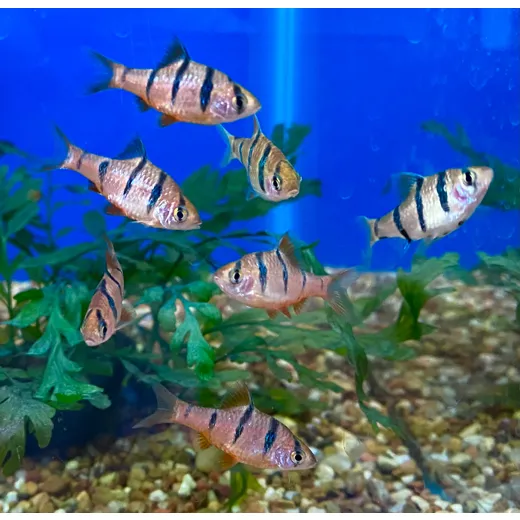
Desmopuntius hexazona is a lovely small barb from Malaysia and Indonesia. While they are often traded and identified as D. pentazona, that species is quite rare in the hobby and possesses a dark spot at the base of the dorsal fin that these fish lack. Both species are notable as a more peaceful alternative to the ubiquitous Tiger Barb. While their pattern resembles tiger barbs quite closely, these fish stay smaller (around 2″ max) and have more intense red colour in the body and fins, especially for males. Five-banded barbs are also quite laid back, not nearly as prone to nipping and bullying tankmates. They work quite well with most similarly-sized community fishes.
Specifications
| Feature | Detail |
|---|---|
| Scientific Name | Desmopuntius hexazona |
| Origin | Malaysia, Indonesia |
| Size (max) | 2 inches |
| Coloration | Intense red body and fins (especially males) |
| Temperament | Peaceful, less aggressive than tiger barbs |
| Compatibility | Works well with similarly sized community fish |
FAQ
Are five-banded barbs suitable for a community tank?
Yes, five-banded barbs are well-suited for community tanks. They are peaceful and do not tend to nip or bully other fish, making them a good choice for mixed-species setups with similarly sized, non-aggressive fish.
How do they compare to tiger barbs in terms of size and color?
Five-banded barbs grow to about 2 inches maximum, which is smaller than tiger barbs. They display more intense red coloration in the body and fins, especially in males, giving them a vibrant appearance.
Do they have any specific care requirements?
They thrive in a well-maintained aquarium with moderate water parameters. A balanced diet and adequate space are recommended to support their health and vibrant coloration.


Lily Jackson –
These barbs are a great addition to my community tank. They’re much calmer than tiger barbs and stay small, which is perfect for a 10-gallon setup. The red color is striking, especially in the males. They don’t bother other fish and seem happy in the group.
Carolyn Roberts –
I was worried about aggression, but these fish are surprisingly peaceful. They swim actively without chasing or nipping. The color is vivid and they look great with my tetras and corydoras.
Lauren Brown –
After trying several barb species, these five-banded barbs are the most reliable. They stay small, don’t stress tankmates, and have a beautiful red hue. Easy to care for and very active in the tank.