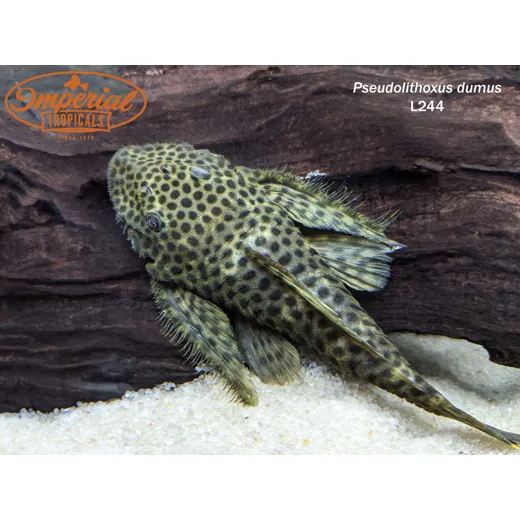
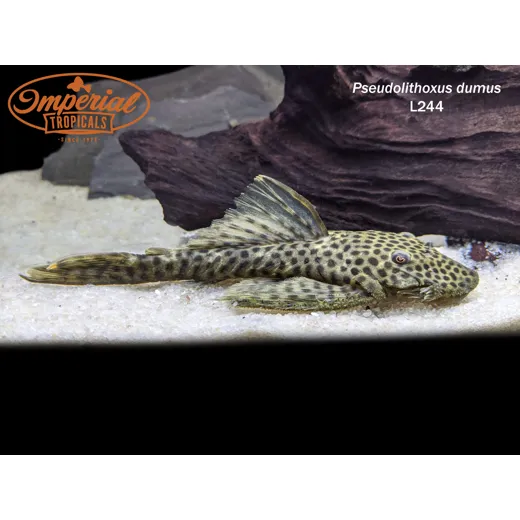
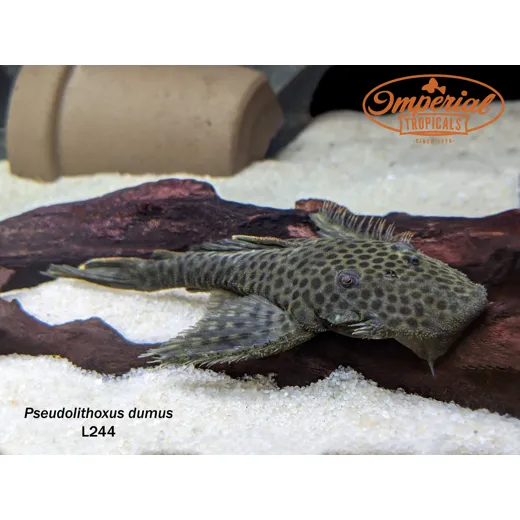
L244 Black Spotted Flyer Pleco
Remarks: The L244 Pleco (Pseudolithoxus dumus), nicknamed the Dumus Pleco or Black Spotted Flyer Pleco, comes from the Colombian Orinoco and Atabapo Rivers. They are primarily an algae grazer and need a high content of biofilm in the tank. They are dark brown with small black spots covering their entire body and fins. As they age, their pectoral fins lengthen to up to 2″ long and grow long odontodes, as seen in the photo. From above, these Flyer Plecos really stand out from other Loricariids!
Scientific Name: Pseudolithoxus dumus
Common Name: L244 Black Spotted Flyer Pleco
Max Size: 5″
pH: 6.5-7.5
Hardness: Moderate
Temperature: Not specified in provided description
| Feature | Value |
|---|---|
| Origin | Colombian Orinoco and Atabapo Rivers |
| Feeding Type | Algae grazer |
| Body Color | Dark brown with small black spots |
| Fins (adult) | Pectoral fins up to 2″ long with odontodes |
FAQ
What is the ideal water temperature for the L244 Black Spotted Flyer Pleco?
Please contact customer service
Does the L244 Pleco require specific tank conditions to thrive?
Yes, it requires a high amount of biofilm in the tank and prefers a pH between 6.5 and 7.5 with moderate hardness.
How does the appearance of the L244 Pleco change as it ages?
As they age, their pectoral fins lengthen to up to 2 inches and develop long odontodes, giving them a distinctive appearance from above.


Ella Newman –
This pleco is a striking addition to my tank. The black spots stand out well against the dark brown body. It’s active and constantly grazing on algae. After a few weeks, I noticed its fins grew longer, which is exactly what the description mentioned. I keep it in a 55-gallon tank with good biofilm buildup and it’s doing well.
Lucas Randall –
The coloration is very distinct and it looks great in the tank. I was worried about algae control, but it’s been eating consistently. The fins are still developing, and I expect them to grow longer over time. Needs a stable pH and good biofilm, which I’ve provided.
Pippa Butler –
I bought this pleco for its unique appearance. It’s not just a typical pleco — the black spots and long fins make it stand out. It’s active and helps keep the glass clean. I’ve maintained a stable pH and moderate hardness, and it’s thriving.