Achilles Tang
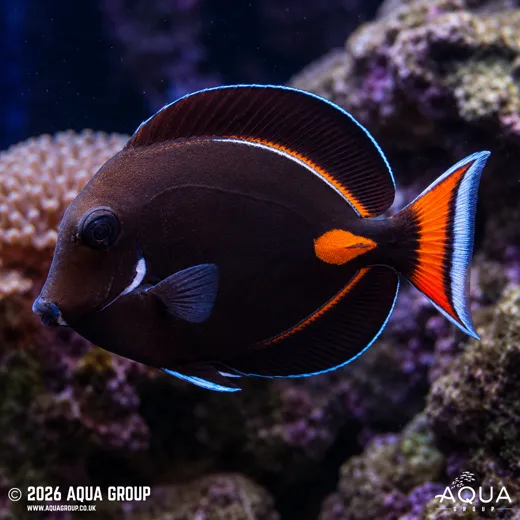
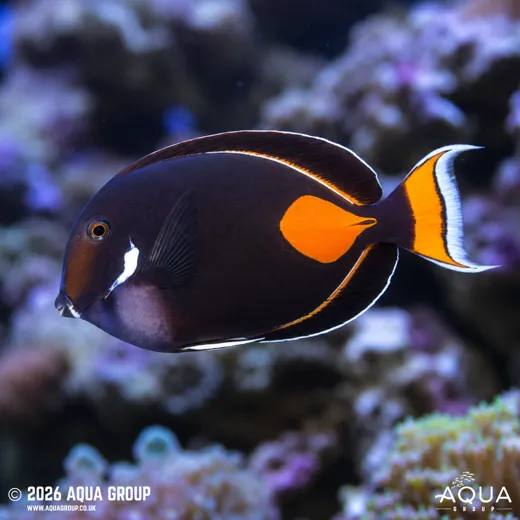
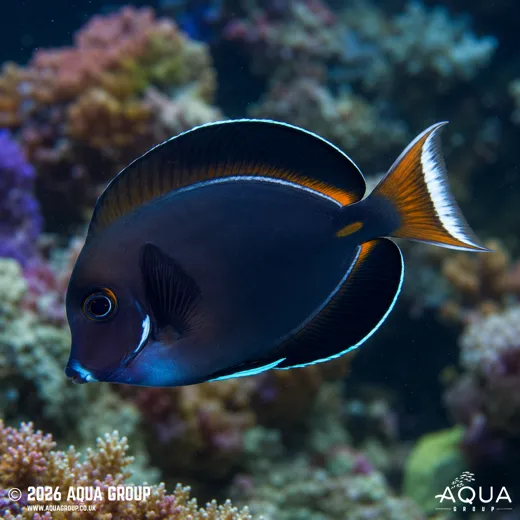
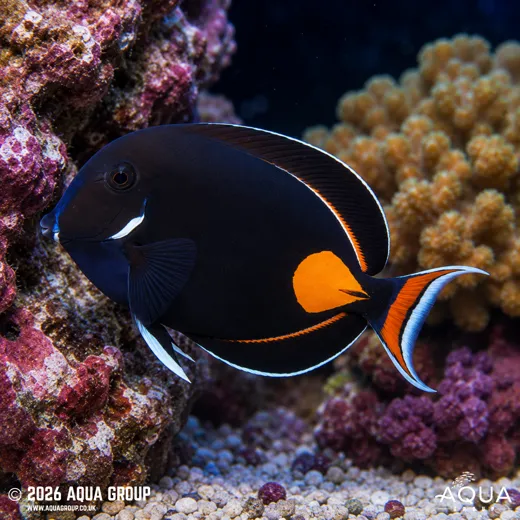
A jet-black surgeonfish marked with a brilliant orange teardrop at the tail base and orange-edged fins. One of the most beautiful tangs, and one of the most demanding.
Feeding
Primarily herbivorous. Dried marine algae several times daily, spirulina foods and some frozen meaty food. Needs near-constant grazing opportunity.
Compatibility
Reef safe but aggressive toward other tangs, particularly other Acanthurus. Generally one per tank.
Behaviour and personality
Extremely active and powerful, coming from surge-zone habitat and wanting high flow and oxygen.
Before you buy
Among the most ich-prone marine fish in the trade and frequently lost in the first months. It needs a very large, high-flow, well-oxygenated system, rigorous quarantine, and proper maintenance.
| Specification | Value |
|---|---|
| Species | Acanthurus achilles |
| Size (adult) | 12-15 inches |
| Water temperature | 75-82°F |
| Water pH | 8.1-8.4 |
| Water hardness | 8-12 dGH |
| Flow requirement | High |
FAQ
Is the Achilles Tang safe for a reef tank?
Yes, it is reef safe, but it can be aggressive toward other tangs, especially other species in the Acanthurus genus.
How often should I feed the Achilles Tang?
Feed several times a day, primarily dried marine algae, spirulina, and small amounts of frozen meaty food to support its herbivorous diet.
What are the key water conditions needed for this fish?
It requires stable water conditions: temperature between 75-82°F, pH of 8.1-8.4, and water hardness of 8-12 dGH. High water flow and oxygen levels are essential.
Carol Oliver –
The Achilles Tang is stunning in appearance with its black body and bright orange markings. It’s very active and needs a large tank with strong water flow. After strict quarantine, it settled well and started grazing on algae daily. Requires constant attention and maintenance, but worth the effort for a visually impressive fish.
Christian Blake –
Beautiful fish with a unique look. I had to prepare a large tank with high flow and proper filtration. It’s not for beginners. After a few weeks, it became a dominant grazer and stayed healthy with daily algae feeding. Needs consistent care and monitoring.
Adrian Butler –
The fish arrived healthy and looked great. It’s aggressive and I had to keep it alone in the tank. Feeding is a daily task. It’s not easy to maintain, but the visual impact is impressive. I’m still learning how to manage its water needs.