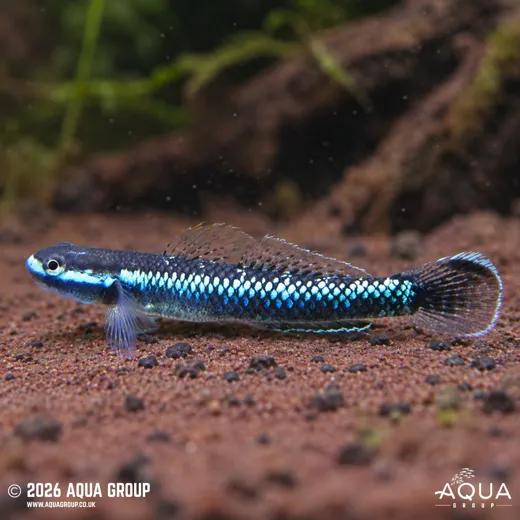
Deep Blue Goby (Stiphodon atropurpureus)
The Deep Blue Goby is a striking freshwater goby admired for the intense blue to turquoise colouration shown by mature males, together with its streamlined body and active grazing behaviour. Peaceful, unusual and highly attractive in the right setup, this species is best suited to mature aquariums with strong oxygenation, clean flowing water and plenty of algae-covered rock surfaces. It makes an excellent choice for aquarists looking for a distinctive riverine species with fascinating natural behaviour.
Common Name:
Deep Blue Goby, Blue Neon Goby
Scientific Name (Latin):
Stiphodon atropurpureus
Maximum Size:
3.5 cm (1.4 inches)
| Water Parameters | Range |
|---|---|
| Temperature | 22-26°C |
| PH | 6.5-7.5 |
| Hardness | 3-8 dGH |
Best kept in groups of 6 or more in a well-oxygenated, flowing environment with ample algae-covered rock for grazing.
FAQ
What is the typical size of a Deep Blue Goby?
The maximum size of a Deep Blue Goby is 3.5 cm (1.4 inches).
What kind of water conditions does this goby prefer?
It prefers water temperatures between 22-26°C, pH levels between 6.5-7.5, and water hardness between 3-8 dGH. Strong oxygenation and flowing water are essential.
Is the Deep Blue Goby suitable for beginner aquarists?
Please contact customer service
Julian Rampling –
The Deep Blue Goby is a stunning addition to my aquarium. The males develop vibrant blue tones after a few weeks, and they’re very active, grazing on algae surfaces. I keep them in a 55-gallon tank with strong filtration and flowing water. They don’t stress the tank and are peaceful with other fish.
Ruth Hamilton –
I bought this goby for a new tank setup. It’s quite different from other gobies—more active and visually striking. The blue coloration is impressive once they mature. I provide plenty of algae rocks and maintain good water flow. They seem to thrive in a mature system.
Andrew Arnold –
After introducing the Deep Blue Goby to my aquarium, I noticed a significant visual improvement. The fish are curious and spend time exploring the rockwork. They don’t eat much but are always active. Great for adding a unique look to a freshwater setup.