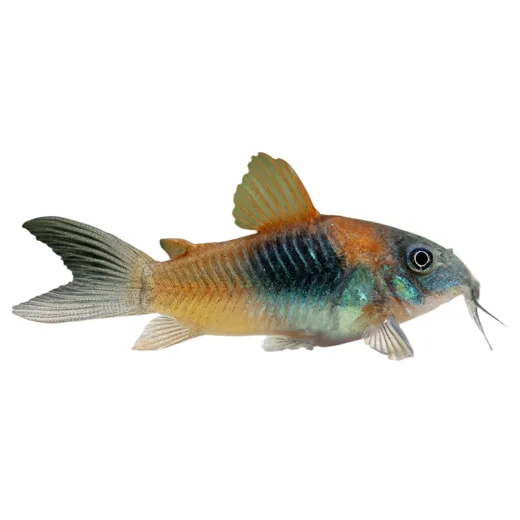
Orange Venezuelan Corydoras
The Orange Venezuelan Catfish is a very peaceful schooling fish that is compatible with most nano aquarium animals, including dwarf cichlids and angelfish.
It is a classic scavenger and will inhabit and feed at the aquarium floor, which should be comprised of sand or smooth gravel. Very coarse substrate can damage its delicate barbels and underbelly. While it is a scavenger, care must be taken to ensure that it receives a good variety of high quality foods and is not simply expected to eat leftover food that other fish do not eat.
This fish is otherwise undemanding as it will accept most dry, frozen, and live foods. It is adaptable to most tropical freshwater conditions as long as standard parameters are maintained.
| Specifications |
|---|
| Species: Orange Venezuelan Corydoras |
| Size: 2.5 inches (6.4 cm) |
| Temperature: 72-82°F (22-28°C) |
| Water pH: 6.0-7.5 |
| Substrate: Sand or smooth gravel |
| Compatibility: Peaceful, schooling fish; compatible with dwarf cichlids, angelfish |
| Feeding: Dry, frozen, and live foods; avoid relying solely on leftover food |
FAQ
What kind of substrate is best for Orange Venezuelan Corydoras?
Sand or smooth gravel is recommended. Coarse substrates can damage their delicate barbels and underbelly.
Can Orange Venezuelan Corydoras live with angelfish and dwarf cichlids?
Yes, it is compatible with both angelfish and dwarf cichlids in a well-balanced community tank.
What types of food should I feed this fish?
It accepts dry, frozen, and live foods. A varied diet is important to ensure proper nutrition, and it should not rely solely on leftover food.
Liam Rutherford –
Added a small group of Orange Venezuelan Corydoras to my 10-gallon nano tank. They are very calm and don’t bother other fish. I feed them a mix of flakes, frozen bloodworms, and occasional brine shrimp. The tank looks cleaner with them scavenging the bottom. Only issue is they need fine sand, not gravel.
Jonathan Ogden –
These catfish are peaceful and active. I paired them with angelfish and they coexist well. I make sure to offer a variety of foods daily. They stay near the bottom and help clean up uneaten food.
Colin May –
Great addition to a small community tank. They don’t compete with other fish and are easy to care for. I noticed they prefer to stay in the sand area. I switched to fine sand and now they’re thriving.