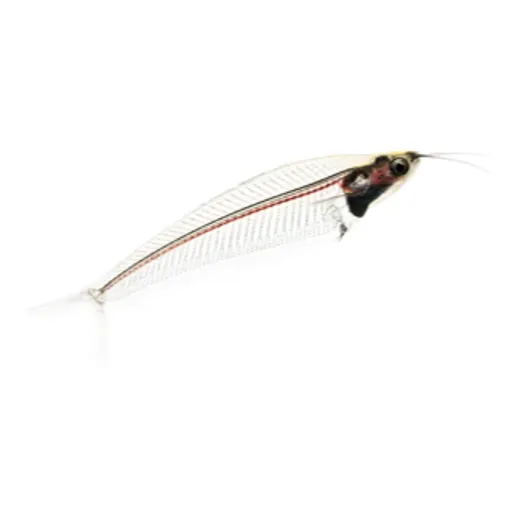
Ghost Glass Catfish
The Ghost Glass Cat is a unique fish that offers fish-keepers an incomparable view of its internal organs. Thanks to its low-pigment and almost clear body, the Ghost Glass Cat is like a living skeleton whose organs, including its swim bladder and vertebral column, are visible.
Ghost Glass Cats, also known as Indian Ghosts, Ghost Fish, Glass Catfish, or Glass Cats, are very peaceful and a great community fish that will give their caretakers hours of enjoyment. Ghost or glass-like in appearance, the Ghost Glass Cat loves a low light condition and is most active during dawn and dusk. As a true schooling fish, it needs other Ghost Glass Cats in the aquarium in order to survive and thrive.
Ghost Glass Cats should be kept in groups of five or more to stay healthy and display natural behavior.
| Specifications |
|---|
| Species: Ghost Glass Catfish |
| Size: Up to 3 inches (7.5 cm) |
| Water Temperature: 72–78°F (22–26°C) |
| Water pH: 6.0–7.5 |
| Group Size: 5 or more |
| Light Preference: Low to moderate |
FAQ
What is the ideal group size for Ghost Glass Catfish?
Ghost Glass Catfish should be kept in groups of five or more to stay healthy and display natural behavior.
How does the Ghost Glass Catfish differ from other catfish species?
The Ghost Glass Catfish has a low-pigment, almost clear body that allows visibility of internal organs such as the swim bladder and vertebral column, making it unique among fish species.
What is the best lighting condition for this fish?
Ghost Glass Catfish prefers low to moderate light and is most active during dawn and dusk.

Maria Dowd –
I bought five Ghost Glass Catfish for my community tank. They are very peaceful and their transparent bodies are fascinating to watch. I noticed their internal organs clearly visible, which is a unique feature. They thrive in low light and are active during early morning and evening. The group behavior is natural and they don’t stress easily.
Alexandra Black –
The fish look like living skeletons. I was amazed by how clear their bodies are. I kept them in a 20-gallon tank with low light. They swim together in schools and seem happy. I only added them in groups of five, as recommended.
William Wilkins –
This fish is a visual delight. The transparency of their bodies shows the swim bladder and spine clearly. They are calm and don’t bother other fish. I keep them in a planted tank with soft lighting. They are active during twilight hours and enjoy the dim environment.