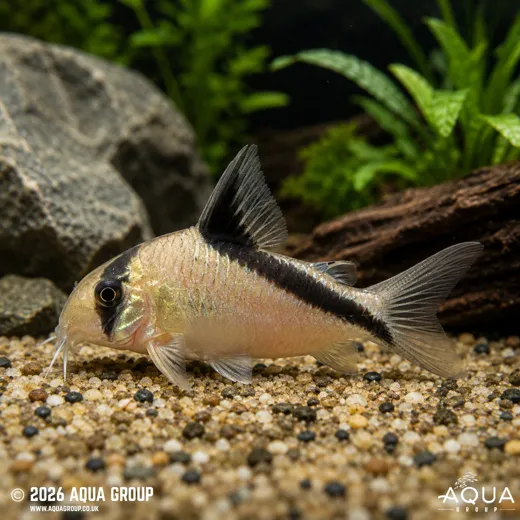
Bandit Corydoras – Hoplisoma metae
The Bandit Corydoras, Hoplisoma metae, is a peaceful South American cory-type catfish with a pale body, dark dorsal saddle and distinctive black “mask” running through the eye. Also known as the Masked Cory, Meta Cory or Bandit Cory, this sociable bottom-dweller is a superb choice for mature community aquariums with soft sand, clean water and calm tank mates. It is best kept in a group, where its natural foraging behaviour, gentle shoaling activity and attractive markings can be properly appreciated.
Common Name
Bandit Corydoras, Bandit Cory, Masked Cory, Meta Cory, Rio Meta Cory
Scientific Name (Latin)
Hoplisoma metae
Still widely traded as Corydoras metae
| Size | 2.5 inches (6.4 cm) |
|---|---|
| Temperature | 72-78°F (22-26°C) |
| Water pH | 6.0-7.0 |
| Hardness | 2-8 dGH |
| Compatibility | Peaceful community fish; avoid aggressive or fast-swimming species |
| Feeding | Detritus, algae, small live or frozen foods |
FAQ
What is the ideal tank size for Bandit Corydoras?
A minimum of 20 gallons is recommended to accommodate a group of at least 6 fish, allowing for proper shoaling and space for natural foraging behavior.
Can Bandit Corydoras be kept with other corydoras species?
Yes, they can be kept with other peaceful corydoras species, but ensure water parameters and tank conditions are stable and compatible.
What type of substrate is best for Bandit Corydoras?
Soft sand is ideal as it mimics their natural habitat and prevents injury to their delicate barbels.

Lucas Henderson –
Bought a group of Bandit Corydoras for my 30-gallon community tank. They’re very active and peaceful, always near the bottom. The black mask is striking and they seem to enjoy the soft sand substrate. Easy to care for and blend well with my tetras and rasboras.
Jane Harris –
These fish are charming and social. I kept them in a group of six and they form a nice shoal. They don’t stir much and stay calm. Only issue is they need slightly soft water and stable temperature.
Bella McGrath –
Great addition to my aquarium. The markings are unique and they’re not aggressive at all. I feed them a mix of sinking pellets and algae wafers. They thrive in a well-maintained tank with soft sand.