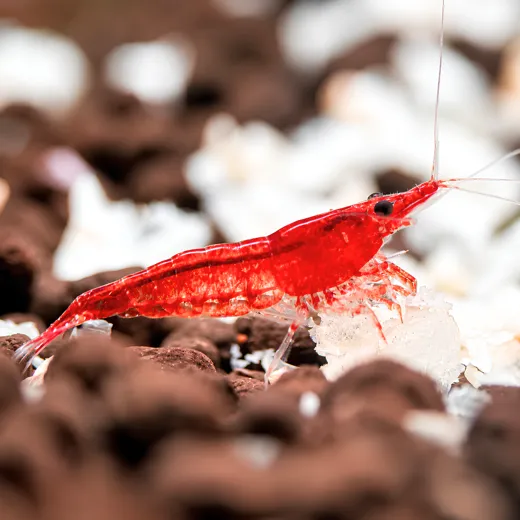
Red Cherry Shrimp for a planted freshwater aquarium
Red Cherry Shrimp are the red colour variety of Neocaridina davidi. These small freshwater shrimp spend much of their time grazing on plants, wood and other aquarium surfaces, adding movement and colour to an established tank.
Choose your quantity
The individual option is listed as a juvenile approximately 1 cm long, supplied unsexed. Choose one shrimp, a pack of 10 or a pack of 20 using the option selector. Check your selected option for the current price and availability.
Young cherry shrimp may show less red than mature shrimp, and colour intensity can vary between individuals. If you are comparing varieties, browse our collection.
Before you add them
Prepare a cycled aquarium with stable water parameters before introducing the shrimp. Ensure the temperature is between 22-26°C and the pH is between 6.5-7.5. Avoid sudden changes in water chemistry.
| Size | Color | Age |
|---|---|---|
| 1 cm | Red | Juvenile |
FAQ
What is the typical size of the red cherry shrimp when purchased?
The shrimp are approximately 1 cm in length when purchased and are considered juveniles.
Do red cherry shrimp require specific water conditions to thrive?
Yes, they thrive in a cycled freshwater aquarium with stable water parameters, including a temperature between 22-26°C and pH between 6.5-7.5.
How long does it take for red cherry shrimp to reach full color intensity?
Color intensity increases as the shrimp mature, typically over several months. Young shrimp may appear less red.
Alexander Parr –
Added a pack of 10 red cherry shrimp to my planted tank. They were active from day one and helped clean up algae and plant debris. The red color is vibrant after a few weeks. Great for adding life to a quiet aquarium.
Ella Lawrence –
Received the shrimp in good condition. They seem healthy and are already exploring the tank. A bit less red than expected at first, but they’re growing well. Will add more when the tank stabilizes.
Bernadette Vaughan –
Perfect for a beginner aquarist. The shrimp are small, active, and don’t stress the plants. They’ve been in the tank for three weeks and are now a regular part of the ecosystem.