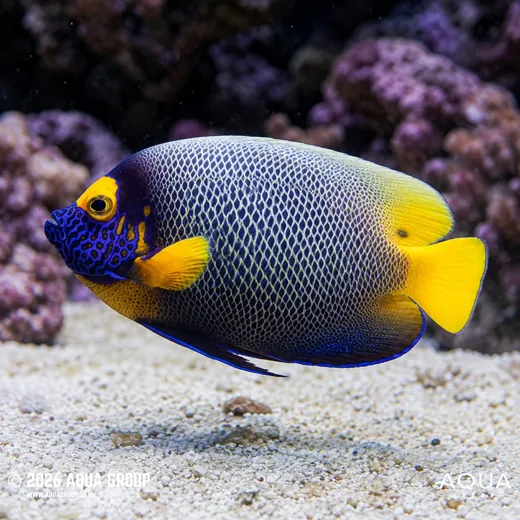
Blueface Angelfish (Pomacanthus xanthometopo)
The Blueface Angelfish is a spectacular large marine angelfish prized for its vivid blue facial markings, bright yellow eye mask and intricate blue-and-yellow scale patterning across the body. Juveniles look dramatically different from adults, developing their characteristic blue facial colour and yellow fins as they mature. Intelligent, bold and highly territorial once established, this species is best suited to large, mature marine aquariums with experienced care.
Common Name
Blueface Angelfish, Blue-faced Angelfish, Yellowface Angelfish
Scientific Name (Latin)
Pomacanthus xanthometopo
Maximum Size
| Size | Details |
|---|---|
| Maximum Size | Up to 12 inches (30 cm) in length |
FAQ
What is the difference between juvenile and adult Blueface Angelfish?
Juveniles have a different appearance, typically with a yellow body and less distinct facial markings. As they mature, they develop vivid blue facial markings, a bright yellow eye mask, and intricate blue-and-yellow scale patterns across the body.
Is the Blueface Angelfish suitable for beginners?
No, the Blueface Angelfish is not recommended for beginners. It is intelligent, bold, and highly territorial once established, requiring a large, mature marine aquarium and experienced care.
What kind of environment does the Blueface Angelfish need?
It requires a large, mature marine aquarium with stable water conditions, ample space, and plenty of hiding spots. A well-established reef system with strong water flow and proper lighting is ideal.


Felicity Roberts –
After several months in our 120-gallon tank, the Blueface Angelfish has become a centerpiece. The coloration is stunning, especially the blue face and yellow eye mask. We had to prepare the tank carefully, as it’s very territorial. Once settled, it’s peaceful and active, and the fish grows steadily.
Wendy Greene –
We bought this angelfish for our marine setup, and it’s impressive. The color change from juvenile to adult is remarkable. We made sure to have a large tank and plenty of rock structures. It’s not easy to keep, but it’s worth the effort.
Kimberly Scott –
The fish arrived healthy and looked vibrant. We noticed the coloration develops slowly over time. It’s not the easiest to maintain due to its territorial nature, but it’s a beautiful addition to a mature aquarium.