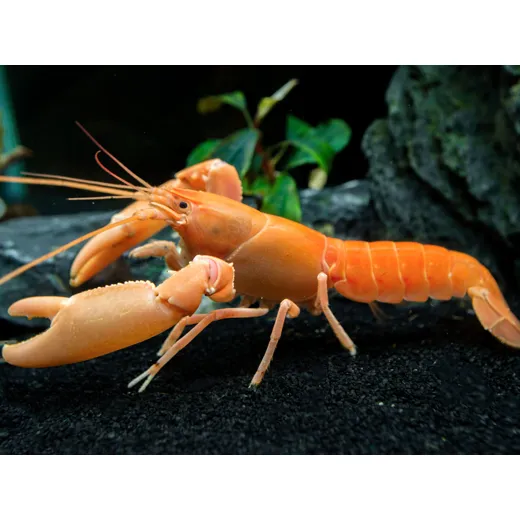
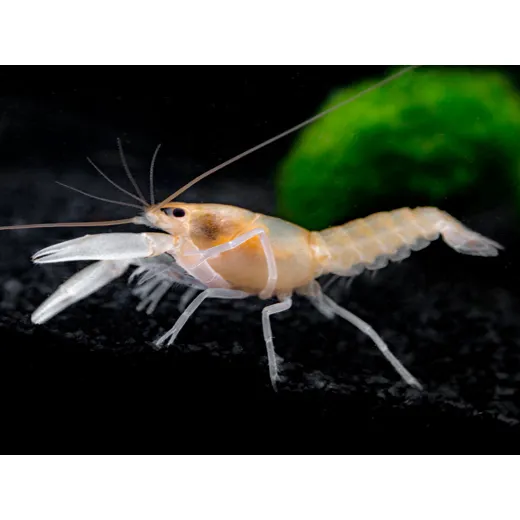
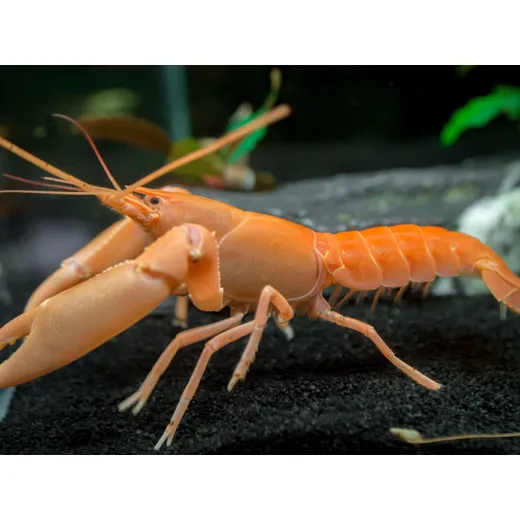
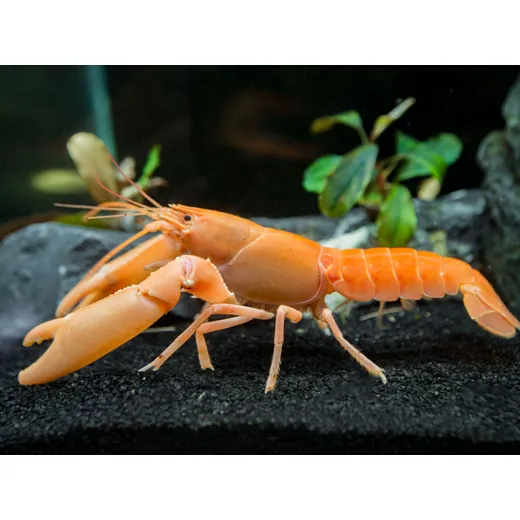
Apricot Crayfish (Cherax holthuisi var. “Apricot”) – Tank-Bred
Important Legal Note: Cherax species of crayfish are considered an invasive species in several U.S. states and is illegal to possess in any form or sell in: Arizona, California, Florida, Maine, Texas, Washington, and Wisconsin. Please check your local regulations before purchasing. We are unable to ship this species to these states. If you reside in one of the above states and try to checkout with this crayfish in your cart you will be unable to checkout and receive an error message until the crayfish is removed from the cart.
As its name declares, the Apricot crayfish is a beautiful solid orange variant of the very popular Emerald Fire AKA Orange Tip Crayfish!
Product Details
| Species | Cherax holthuisi var. “Apricot” |
|---|---|
| Origin | Tank-bred |
| Color | Solid orange |
| Size (adult) | Approx. 3-4 inches |
| Lifespan | 5+ years |
FAQ
Is the Apricot crayfish suitable for a freshwater aquarium?
Yes, the Apricot crayfish is well-suited for freshwater aquariums with appropriate water parameters and ample hiding spots.
What are the ideal water conditions for this crayfish?
The Apricot crayfish prefers a stable freshwater environment with a temperature between 68°F and 78°F, pH between 6.5 and 7.5, and soft to moderately hard water.
Can this crayfish be kept with other aquatic species?
Please contact customer service for specific compatibility recommendations based on your tank setup.
Piers Greene –
The Apricot crayfish is vibrant and active. It quickly adapted to our 20-gallon tank with a well-planted setup. It enjoys digging and exploring, and it’s a great addition to a community tank with peaceful fish.
Sue Hamilton –
Beautiful coloration and very hardy. We’ve had it for three months and it’s thriving. The tank-bred status means it’s healthy and not wild-caught, which is a plus for beginners.
Karen Butler –
This crayfish is a stunning centerpiece. It’s active during the day and shows interest in food. We appreciate the clear legal warning about invasive status, which helps prevent accidental violations.