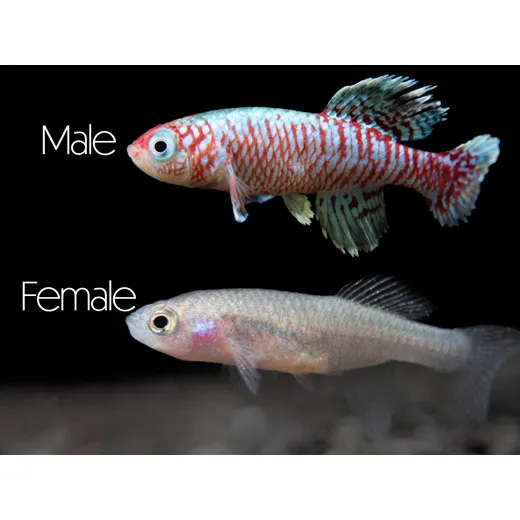
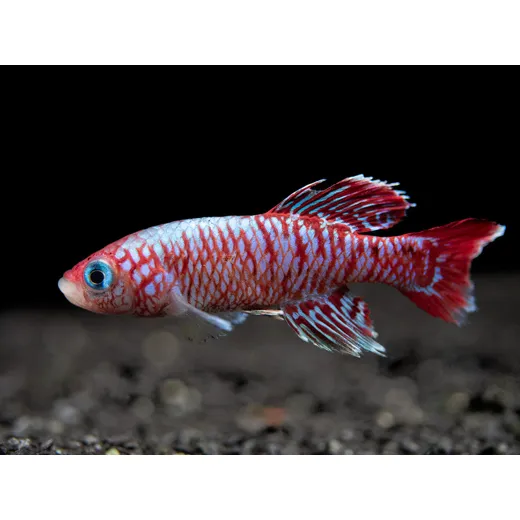
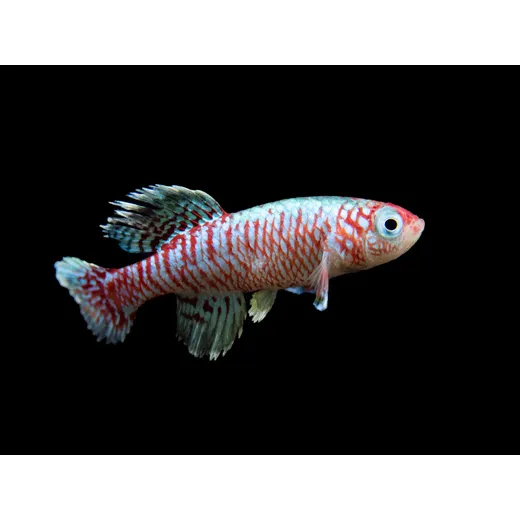
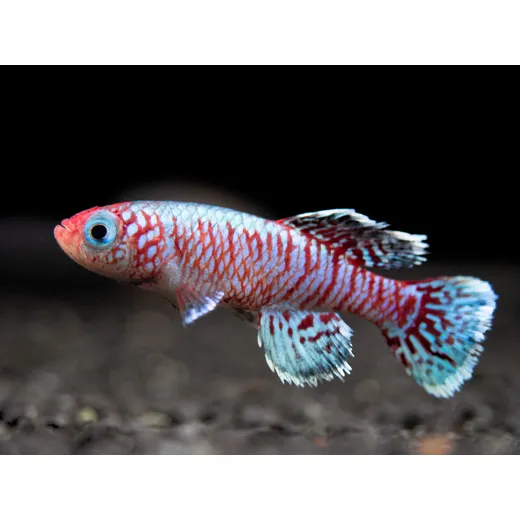
Blue Egger’s Killifish (Nothobranchius eggersi) – Tank-Bred
This hardy annual killifish has phenomenal coloration and is great for breeding projects!
The Blue Egger’s Killifish (Nothobranchius eggersi) is an extremely colorful, peaceful fish whose small size makes it absolutely perfect for the nano or planted aquarium. Native to stagnant swamps and slow-moving waterways in Tanzania, this colorful fish is excellent for aquariums with very low water flow or, under the correct strict maintenance schedule, no water flow at all. It is an annual killifish, meaning it completes its life cycle in one year and dies at the end of the season.
| Species | Nothobranchius eggersi |
|---|---|
| Size | 1.5 to 2 inches |
| Water Conditions | Warm, slightly acidic to neutral (pH 6.0–7.0), low flow |
| Lifespan | 1 year (annual species) |
| Compatibility | Peaceful; best with small, non-aggressive fish |
FAQ
What is the lifespan of the Blue Egger’s Killifish?
The Blue Egger’s Killifish has a lifespan of one year, as it is an annual species that completes its life cycle in a single year.
Is this fish suitable for a planted aquarium?
Yes, this fish is well-suited for planted aquariums due to its small size and preference for low water flow environments.
How should I care for this fish during the breeding season?
Maintain warm water conditions with a pH between 6.0 and 7.0 and provide a stable, low-flow environment. The fish will naturally breed under strict maintenance schedules, including periodic water changes and temperature control.

Thomas Vaughan –
The Blue Egger’s Killifish arrived healthy and vibrant. I’ve kept them in a 10-gallon planted tank with low flow. Their colors are striking and they’re very peaceful. I’ve observed breeding behavior after a few months, which was exciting to see.
William Mackenzie –
Great fish for a small tank. They stay active and colorful even in low light. I appreciate the tank-bred quality—no stress from wild-caught fish. Easy to maintain with minimal water changes.
Penelope Gill –
The fish are very active and show beautiful blue and silver patterns. I’ve kept them with dwarf corydoras and they coexist well. The instructions for breeding were clear and helpful.