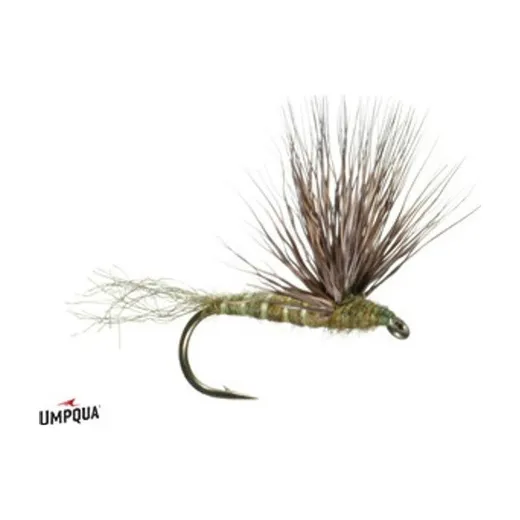
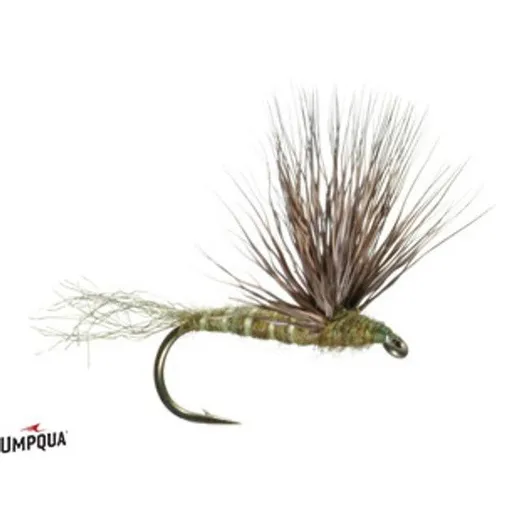
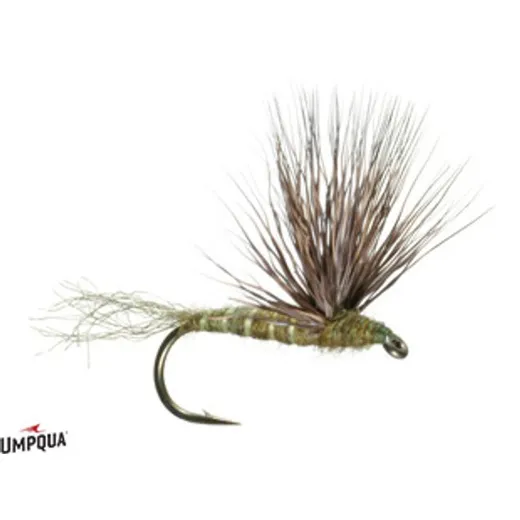
Sparkle Dun Baetis – Gray Olive
John Juracek and I started tying the Sparkle Dun in the early 1980’s as a Pale Morning Dun imitation for the selective trout on the Henry’s Fork. The PMD emergences on this river are legendary, and to consistently fool the big rainbows we needed a better fly than was available at that time. We wanted a fly that was more durable and longer floating than the popular no-hackle pattern, and was a better imitation of an emerger or impaired-stillborn dun compared to the Comparadun style. After a bit of trial and error, we and our fly tiers at Blue Ribbon Flies came up with the Sparkle Dun—a simple but clean combination of zelon, deer hair, and dubbing that gave the fly the silhouette and floating qualities we wanted. We soon discovered the new fly worked remarkably well. The Henry’s Fork trout respond strongly to this pattern, especially during early morning emergences.
Key Features
| Component | Material |
|---|---|
| Zelon | Primary body material |
| Deer Hair | For natural movement and texture |
| Dubbing | For color and softness |
FAQ
What makes the Sparkle Dun different from other dun patterns?
The Sparkle Dun features a clean combination of zelon, deer hair, and dubbing, offering better durability, longer float, and a more accurate imitation of an emerger or impaired-stillborn dun compared to traditional patterns like the Comparadun.
Is the Gray Olive shade suitable for specific trout habitats?
Yes, the Gray Olive shade closely mimics the natural coloration of emerging duns in the Henry’s Fork and is particularly effective during early morning emergences when trout are most active.
How should I tie or present this fly in the water?
Present the Sparkle Dun slowly and naturally, allowing it to float with a slight drift. It works best when fished in still or slow-moving water where trout are actively feeding on emergers.
Ava Bond –
Fished this pattern on the Henry’s Fork during a spring morning and saw several trout take it. The float was long and natural, and the fly held up well in the current. Great imitation of a pale morning dun.
Richard Oliver –
Used it in a slow stream and noticed trout were consistently interested. The gray olive color matched the natural emerger well. A bit more durable than other dun patterns I’ve tried.
Nathan Fisher –
This fly has become my go-to for early morning fishing. It floats smoothly and looks realistic. The deer hair adds a nice movement that draws fish in.