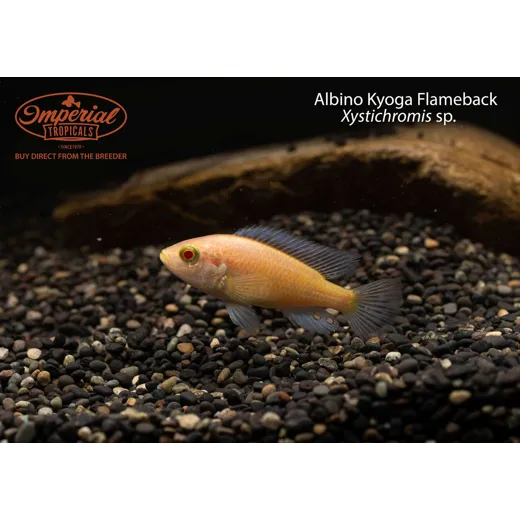
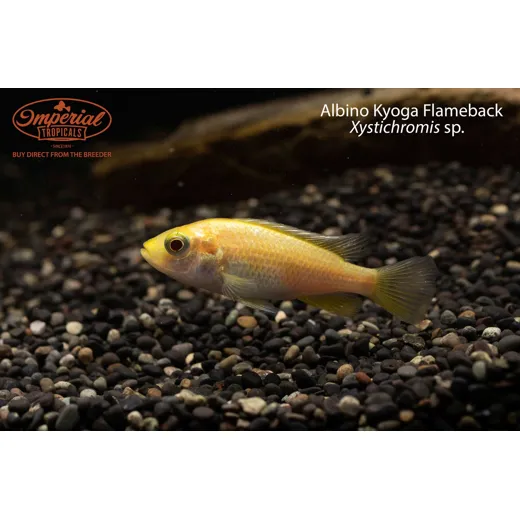
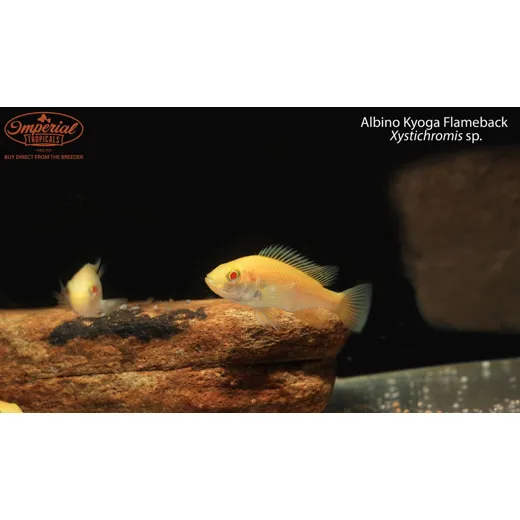
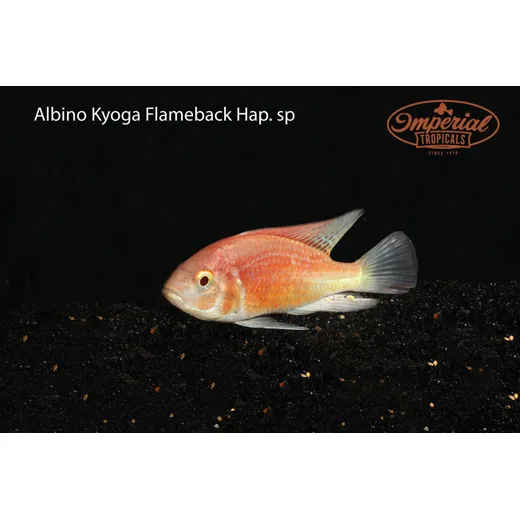
Albino Kyoga Flameback (Xystichromis sp.)
This is a BOGO listing! If you buy 1 fish, you will receive 2 fish!
Remarks: The Kyoga flameback (Xystichromis sp.) is a Haplochromine species native to Lake Kyoga in Eastern Africa. We have an albino form with lots of red and orange coloration. Females remain pale or peach colored. Like most haps, they are maternal mouthbrooders and do best when kept in male-only set-ups or harem set-ups, with 3-4 females for every male.
Scientific Name: Xystichromis sp.
Common Name: Albino Kyoga Flameback
Max Size: 5″
pH: 7.5-8.5
Hardness: Hard
Temperature: 72-78°
| Parameter | Value |
|---|---|
| Aggressiveness | Medium to high |
| Compatibility | Best with non-aggressive community fish; avoid other haps or aggressive species |
| Feeding | Accepts a variety of flake, pellet, and live foods |
FAQ
What is the recommended tank setup for Kyoga flamebacks?
Kyoga flamebacks do best in male-only or harem setups with 3-4 females per male. They require a well-maintained tank with stable water parameters and plenty of hiding spots.
Are the albino Kyoga flamebacks suitable for beginners?
They are best suited for experienced aquarists due to their specific water parameter needs and maternal mouthbrooding behavior.
Can Kyoga flamebacks be kept with other cichlids?
Not recommended. They may display aggression toward other cichlids, especially in mixed species setups.
Carolyn Walker –
The albino coloration is striking, especially the red and orange highlights. I kept one male with three females in a 55-gallon tank. Water parameters stayed stable with regular testing. The fish are active and show good coloration after a few weeks.
Penelope Lawrence –
Received two fish with my order. The males are very active and the females stay calm. I’ve maintained a consistent pH and temperature. The fish seem healthy and show good appetite.
Amanda Fisher –
The BOGO offer was great. I got two fish for the price of one. The fish are vibrant and the coloration is more intense than expected. I’ve set up a male-only tank to avoid aggression and it’s working well.
Thomas Nash –
The fish arrived healthy, but I had to adjust the temperature slightly to stay within the 72-78°F range. They are active but I noticed some stress during the first week. Needs a stable environment.