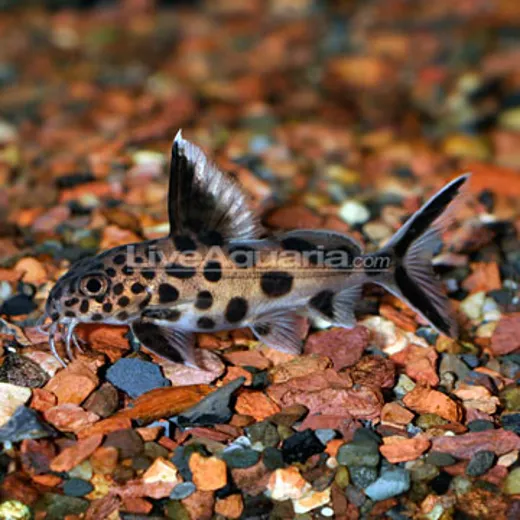
Synodontis Multipunctatus Catfish
SAVE 44%!
The Synodontis Multipunctatus Catfish originates within Lake Tanganyika, Africa. It is silver to gold in color with many black spots arranged in a leopard-like pattern. This species is also known as an upside-down catfish, as it will hang in an inverted position. They are a beautiful catfish and are wonderful scavengers that are not overly aggressive.
The Synodontis Multipunctatus Catfish will appreciate a fine sandy bottom with large caves and crevices for hiding places in an aquarium of 50 gallons or more. Sensitive to nitrates, good water conditions are necessary. It prefers a current in the aquarium. It can be kept as a schooling fish or in a tank with other Synodontis species.
| Specifications |
|---|
| Origin: Lake Tanganyika, Africa |
| Color: Silver to gold with black spots |
| Behavior: Scavenger, not aggressive, may hang upside down |
| Minimum Tank Size: 50 gallons |
| Water Conditions: Low nitrate, good water quality, prefers current |
| Compatibility: Best kept in groups or with other Synodontis species |
FAQ
What is the typical behavior of the Synodontis Multipunctatus Catfish?
The Synodontis Multipunctatus Catfish is known for hanging upside down and is a peaceful scavenger. It does not show aggressive behavior and prefers to hide in caves or crevices.
What kind of tank setup is recommended for this catfish?
A tank of at least 50 gallons with a fine sandy substrate, large caves, and crevices is recommended. A gentle to moderate current and stable water conditions are essential.
Are there any specific water parameters this catfish requires?
Yes, the Synodontis Multipunctatus Catfish is sensitive to nitrates and requires good water quality. Low nitrate levels and stable parameters are necessary for its health.
Tim Knox –
Bought this catfish for my 60-gallon tank. The fish has been hanging upside down and looks very natural. It’s peaceful and doesn’t bother other fish. I appreciate the black spots and the clean appearance. Water quality has to be stable, but once that’s set, it’s a great addition.
Joe MacLeod –
The fish arrived healthy and has been active since setup. I added sand and some rock caves as suggested. It spends most of its time near the bottom, occasionally flipping upside down. Not aggressive and doesn’t eat much, which is good for the tank.
Jack Rutherford –
I kept it with two other Synodontis species and they all coexist well. The fish is beautiful with its leopard-like spots. I’ve maintained low nitrates and it’s thriving. The tank setup is simple but effective.