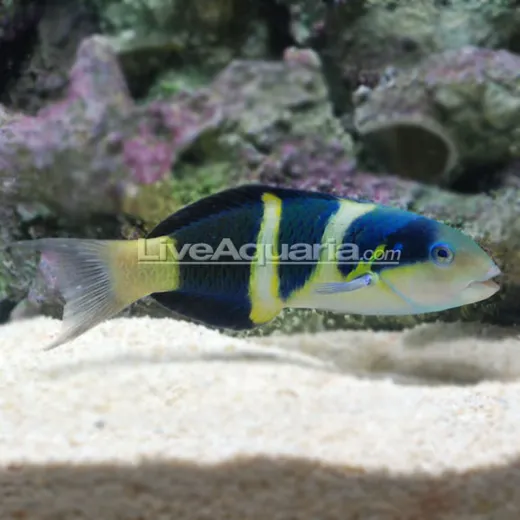
Jansen Saddle Wrasse
The Jansen Saddle Wrasse, also known as the Saddleback Wrasse or Jansen’s Wrasse, is a striking saltwater fish with a light blue to white body featuring five to six vertical dark, thick stripes bordered in yellow. These stripes become more pronounced and spread apart as the fish matures.
It is best suited for semi-aggressive to aggressive saltwater aquariums and requires a minimum of 75 gallons. It should be introduced as one of the last fish in the tank to avoid territorial aggression. A spacious environment with ample live rock for hiding is essential.
It may coexist with other aggressive fish in tanks of 125 gallons or larger, and can be kept with a mate in such setups. The fish will eat mantis shrimp and bristleworms as part of its diet.
| Key Features | Details |
|---|---|
| Body Color | Light blue to white with dark vertical stripes bordered in yellow |
| Adult Size | Up to 6 inches |
| Minimum Tank Size | 75 gallons |
| Compatible Tank Mates | Aggressive saltwater fish in larger tanks (125 gallons or larger) |
| Diet | Mantis shrimp, bristleworms, and varied marine foods |
FAQ
What is the ideal tank size for a Jansen Saddle Wrasse?
A minimum of 75 gallons is recommended, with 125 gallons or larger preferred for housing a mate or more aggressive tank mates.
Can the Jansen Saddle Wrasse be kept with other fish?
It can be kept with aggressive saltwater fish in tanks of 125 gallons or larger. It should be introduced last to avoid territorial behavior.
What does the Jansen Saddle Wrasse eat?
It primarily eats mantis shrimp and bristleworms, and a varied marine diet is recommended.

Blake Greene –
The Jansen Saddle Wrasse is a stunning fish with beautiful, evolving stripes. We introduced it last in a 125-gallon tank with aggressive fish, and it has settled well. It’s active and territorial, so patience is key. We feed it bristleworms and occasional mantis shrimp. It looks great and adds a lot of visual appeal.
Lucas Powell –
We added the Saddle Wrasse to our 75-gallon tank after all other fish were established. It was initially aggressive but has calmed down over time. The stripes are very noticeable and it’s a highlight in our display. Feeding it live foods works well.
Mary Hamilton –
This wrasse is a true showpiece. The coloration changes as it grows, and it’s fascinating to watch. We kept it alone in a larger tank and it’s now a regular part of our saltwater setup. It doesn’t eat much but is active and healthy.