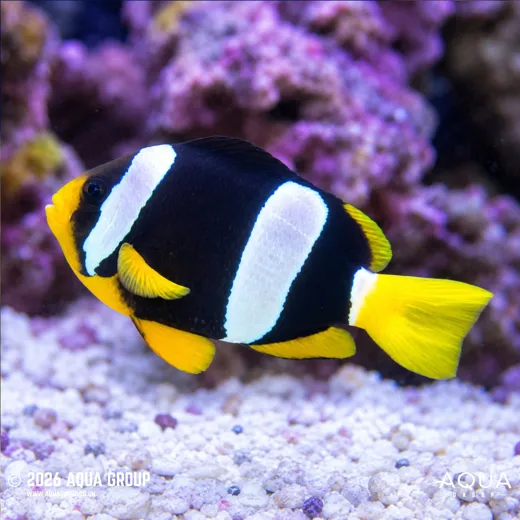
Clarkii Clownfish (Amphiprion clarkii)
The Clarkii Clownfish, Amphiprion clarkii, is a bold and highly variable Indo-West Pacific anemonefish recognised by its dark brown to black body, contrasting white bars and yellow, orange or white fins. Also known as Clark’s Anemonefish or the Yellowtail Clownfish, its appearance varies considerably between geographical regions, with some individuals displaying much more orange or yellow than others. This adaptable species naturally lives among the tentacles of several host anemones and is one of the larger, more assertive clownfish commonly maintained in marine aquariums. Its hardiness, striking markings and engaging behaviour make it a popular choice, although mature pairs can become strongly territorial.
Key Features
| Feature | Detail |
|---|---|
| Scientific Name | Amphiprion clarkii |
| Common Names | Clark’s Anemonefish, Yellowtail Clownfish |
| Origin | Indo-West Pacific |
| Size | Up to 10 cm (4 inches) |
| Behavior | Assertive, territorial when mature |
| Compatibility | Best kept with anemones and non-aggressive tank mates |
FAQ
What is the typical coloration of the Clarkii Clownfish?
The Clarkii Clownfish has a dark brown to black body with white bars and yellow, orange, or white fins. Coloration can vary by region, with some individuals showing more orange or yellow than others.
Does the Clarkii Clownfish require a specific type of anemone?
Yes, the Clarkii Clownfish naturally lives among anemones and requires a compatible host anemone to thrive in a home aquarium. Commonly accepted anemones include Heteractis magnifica or Stichodactyla helianthus.
How does the Clarkii Clownfish behave in a group setting?
Mature pairs can become strongly territorial, especially in confined spaces. It is best to keep one pair or a single individual to avoid aggression.
Virginia Martin –
The Clarkii Clownfish is a striking addition to my marine tank. Its vibrant colors and active behavior are captivating. I’ve paired it with a healthy anemone, and it spends most of its time near the tentacles. Only issue is that the male became quite territorial after a few weeks, so I now keep it alone.
Madeleine Skinner –
Great fish with bold markings. The yellow fins stand out well in the tank. I’ve had it for three months and it’s very active, especially during feeding times. It’s not the quietest fish, but it’s worth the energy.
Robert Murray –
Highly recommended for experienced marine aquarists. The color variation between individuals is impressive. My fish has adapted well to the anemone and shows daily interaction with it. A bit aggressive at first, but settled after a month.