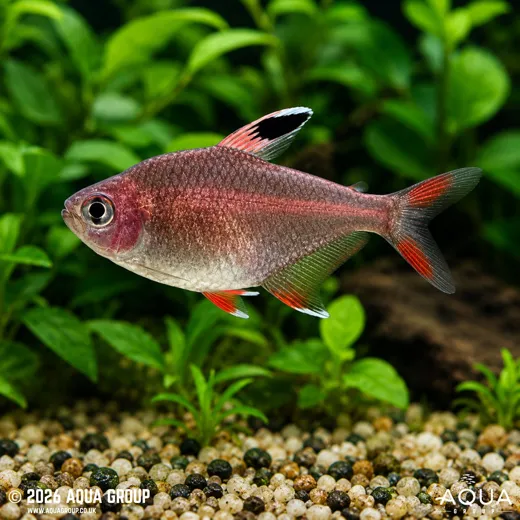
Rosy Tetra (Megalamphodus rosaceus)
The Rosy Tetra is a peaceful and elegant South American shoaling fish, loved for its soft pink to rose-coloured body, translucent fins and graceful swimming behaviour. Mature males often develop brighter colour and longer dorsal and anal fins, while females are usually fuller-bodied. Also widely sold as Hyphessobrycon rosaceus, this species makes a beautiful addition to mature planted community aquariums, especially when kept in a proper group with subdued lighting, dark décor and calm tank mates.
Common Name:
Rosy Tetra. Also commonly referred to as the White-Fin Rosy Tetra, Rosy Fin Tetra, Rose Tetra or Rosy Characin.
Scientific Name (Latin):
Megalamphodus rosaceus
Also
| Species | Megalamphodus rosaceus |
|---|---|
| Common Names | Rosy Tetra, White-Fin Rosy Tetra, Rosy Fin Tetra, Rose Tetra, Rosy Characin |
| Origin | South America |
| Temperament | Peaceful |
| Group Size | 6 or more fish |
| Water Conditions | Temperature: 22–26°C, pH: 6.0–7.0, Hardness: 2–10 dGH |
| Feeding | Vegetarian and omnivorous; accepts flake, pellet, and live foods |
FAQ
What is the typical group size for Rosy Tetras?
Rosy Tetras should be kept in a group of at least six to ensure natural shoaling behaviour and reduce stress.
Do males and females differ in appearance?
Yes, mature males often develop brighter pink colouration and longer dorsal and anal fins, while females tend to have fuller, more rounded bodies.
What kind of tank setup works best for Rosy Tetras?
They thrive in mature planted community tanks with subdued lighting, dark décor, and calm tank mates. Avoid strong light and aggressive fish.




Liam Payne –
I’ve had a group of Rosy Tetras for three months now. They’re very peaceful and add a soft, elegant look to the tank. The males have developed nice pink hues and longer fins. I keep them with other peaceful community fish and they don’t compete for space. The tank looks much more natural with them in it.
Faith Wilkins –
The fish are active but not flashy. They swim in a coordinated group and look beautiful in a planted tank. I noticed the males became more vibrant after a few weeks. I like the subtle pink tones and the way their fins move in the water.
Cameron Parsons –
Great addition to my community tank. They don’t stress other fish and are easy to care for. I feed them daily with flakes and occasional live foods. The colouring is soft and natural, and they seem happy in the dim lighting I provide.