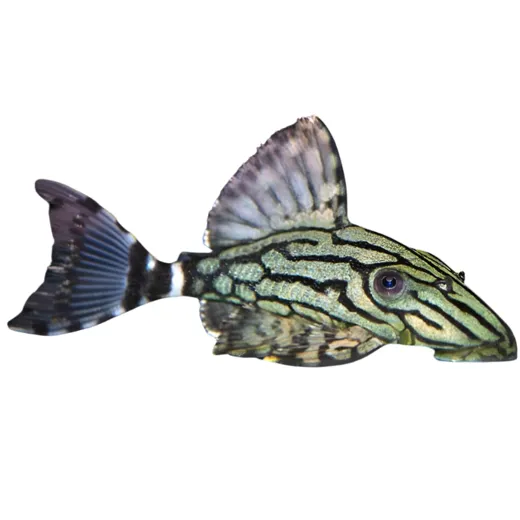
Royal Pleco L191
The L191 Royal Pleco is a large, armored catfish known for its bold, wood-eating behavior and impressive appearance. Native to Colombia’s Rio Caquetá and Rio Orinoco regions, this variant of the Panaque genus is part of the Royal Pleco complex and is prized by pleco collectors for its striking looks and hardy nature.
(<em>Panaque cf. nigrolineatus</em> "L191")
Key Features
-
Coloration: Deep olive to dark green body with lighter cream or yellowish stripes running along the body and head
-
Fins: Broad, paddle-like pectoral fins and a tall, sail-like dorsal fin
-
Eyes: Bright red to orange—an identifying feature in adult specimens
| Specification | Detail |
|---|---|
| Species | Panaque cf. nigrolineatus |
| Origin | Rio Caquetá and Rio Orinoco, Colombia |
| Size | Up to 12 inches (30 cm) when mature |
| Behavior | Wood-eating, peaceful, territorial in groups |
| Water Conditions | Soft to moderately hard water, pH 6.0–7.5, temperature 72–82°F |
FAQ
What is the typical size of a Royal Pleco L191?
The Royal Pleco L191 can grow up to 12 inches (30 cm) when mature.
Where does the Royal Pleco L191 originate from?
It is native to Colombia’s Rio Caquetá and Rio Orinoco regions.
What are the distinguishing features of the Royal Pleco L191?
It has a deep olive to dark green body with cream or yellowish stripes, broad pectoral fins, a tall dorsal fin, and bright red to orange eyes in adult specimens.


Claire Welch –
The Royal Pleco L191 is a stunning addition to my aquarium. Its vibrant red eyes and striking coloration stand out in the tank. It’s active but not aggressive, and it enjoys chewing on driftwood. Easy to care for with proper water conditions. A true showpiece for any freshwater setup.
Wanda Vaughan –
I’ve had this pleco for six months now and it’s thriving. The coloration is vivid and the fish is very calm. It doesn’t bother other tank mates and is a great wood eater. The dorsal fin and pectoral fins are impressive to watch.
Pippa Paige –
Looks beautiful in the tank. The red eyes are a standout feature. It’s a bit shy at first but settles into the environment well. I do need to provide plenty of driftwood for it to eat, but it’s worth the effort.