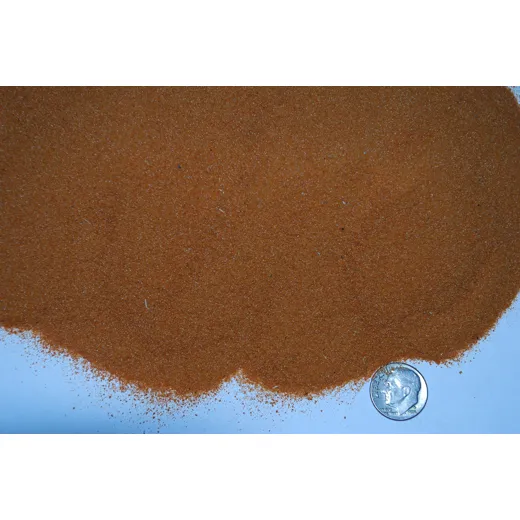
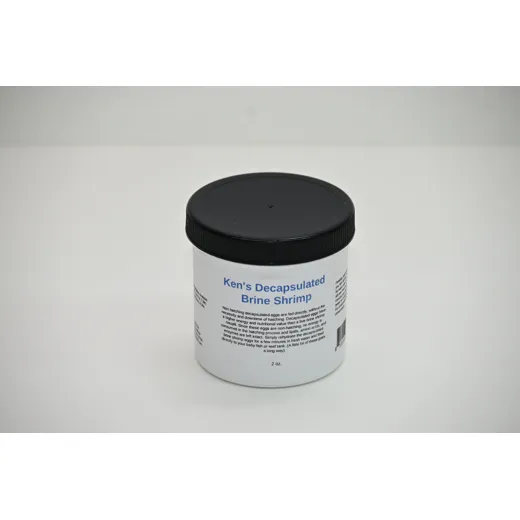
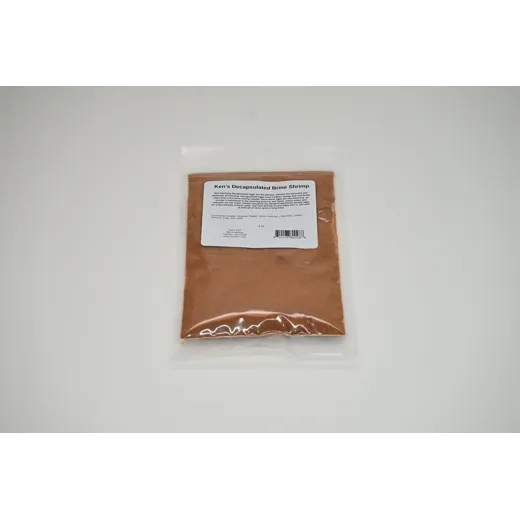
Ken’s Decapsulated Brine Shrimp Eggs
Non-hatching decapsulated eggs are fed directly, without the necessity and downtime of hatching. Decapsulated eggs have a higher energy and nutritional value than live brine shrimp nauplii. Since these eggs are non-hatching, no energy is consumed during the hatching process, and lipids, amino acids, and enzymes remain intact. Simply rehydrate the decapsulated brine shrimp eggs for a few minutes in fresh water and feed directly to your baby fish or reef tank. A little bit of these goes a long way.
Product Sizes and Packaging
| Size | Package Details |
|---|---|
| 2 oz | Jar |
| 8 oz | Two food-grade resealable poly nylon bags, each containing 4 oz |
| 1 lb | Four food-grade resealable poly nylon bags, each containing 4 oz |
FAQ
How long does it take to rehydrate the decapsulated brine shrimp eggs?
It takes a few minutes to rehydrate the decapsulated brine shrimp eggs in fresh water.
Are these eggs suitable for use in reef tanks?
Yes, these decapsulated eggs are suitable for feeding to baby fish and in reef tanks.
Do the eggs contain live brine shrimp?
No, these are non-hatching decapsulated eggs and do not contain live brine shrimp.

Joseph Quinn –
I’ve been using these for my neon tetras and they seem to be thriving. The rehydration process is quick and the eggs stay fresh longer than live nauplii. Great value for the amount provided.
Deirdre Lyman –
My reef tank has been feeding on these for a few weeks now. The fish are more active and the coloration has improved. No hatching issues, just a simple rehydration process.
Lauren Lee –
The packaging is secure and the eggs stay moist. I appreciate the convenience of not having to hatch them. My fry are eating well and I don’t have to wait for live nauplii to appear.
Tracey Bailey –
I switched from live brine shrimp to these and noticed a difference in the fish’s health. The nutritional content seems better because no energy is lost during hatching.