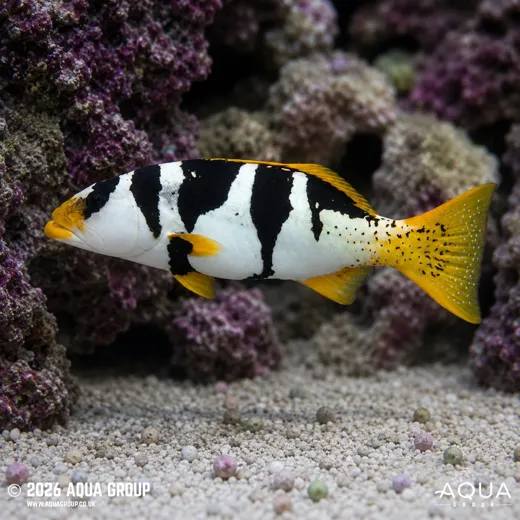
Saddleback Grouper (Plectropomus laevis)
The Saddleback Grouper, Plectropomus laevis, is a spectacular but exceptionally large Indo-Pacific coral grouper recognised for its striking black-saddled juvenile colouration and vivid blue spotting. Also known as the Blacksaddled Coral Grouper, Blacksaddled Coral Trout or Chinese Footballer, this species occurs in two principal colour forms: a pale form with bold black saddle-shaped markings and yellow fins, and a darker brown, red or olive form covered with blue spots. Although visually impressive, it is a powerful predatory reef fish requiring a very large, professionally filtered marine aquarium and carefully selected tank mates.
Common Name
Saddleback Grouper, Blacksaddle
| Species | Plectropomus laevis |
|---|---|
| Common Names | Saddleback Grouper, Blacksaddled Coral Grouper, Blacksaddled Coral Trout, Chinese Footballer |
| Colour Forms | Pale form with black saddle and yellow fins; darker brown, red or olive form with blue spots |
| Habitat | Indo-Pacific coral reefs |
| Aquarium Requirements | Very large, professionally filtered marine aquarium with carefully selected tank mates |
FAQ
What are the two main colour forms of the Saddleback Grouper?
The two main colour forms are a pale form with bold black saddle-shaped markings and yellow fins, and a darker brown, red, or olive form covered with blue spots.
What kind of aquarium setup is needed for this fish?
A very large, professionally filtered marine aquarium is required, along with carefully selected tank mates.
Is the Saddleback Grouper suitable for beginner aquarists?
Please contact customer service
Sally Berry –
The Saddleback Grouper is a stunning addition to a well-established marine tank. After several months, the fish has developed its full colouration, showing clear black saddle markings and blue spots. It is active and predatory, so tank mates must be chosen carefully. The aquarium setup needs to be large and well-filtered, which we have maintained with professional equipment.
Harry Johnston –
We acquired this fish for our 150-gallon reef tank. It has been thriving for over a year. The colouration is impressive, especially the blue spotting on the darker form. We have avoided aggressive species and it coexists peacefully. Maintenance is demanding, but the visual impact is worth it.
Steven Hill –
The fish looks beautiful in the tank, but it requires a lot of space and filtration. We initially thought it would be easier to manage, but it is quite active and needs constant monitoring. It’s not for small or novice setups.