Blue Angelfish
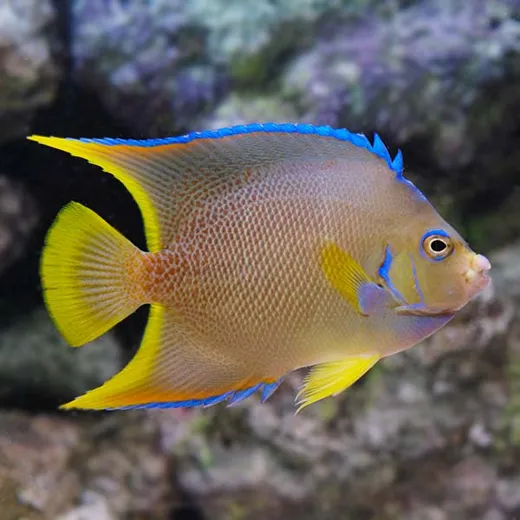
The Blue Angelfish, also known as the Common Angelfish, features an overall aqua hue with yellow shimmer and yellow edges on the fins and scales. It lacks the striking blue crown and blue highlights seen in the Queen Angelfish.
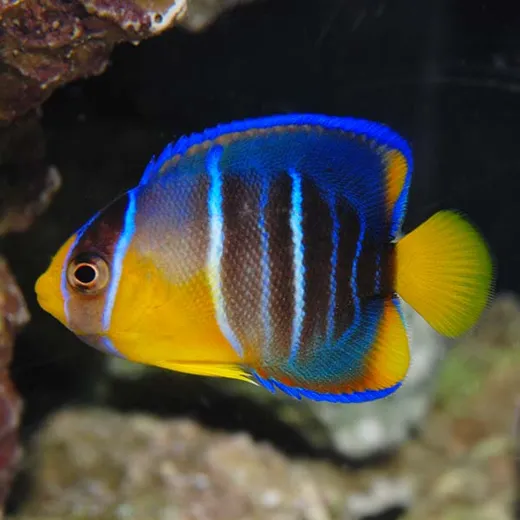
Juvenile Blue Angelfish have a yellowish-brown body with pale blue striping, which changes as they mature.
Living Conditions
Requires a large aquarium of at least 250 gallons with ample hiding spots. Due to its aggressive nature, especially toward other angelfish, it is best kept alone in the tank.
Compatibility
Not suitable for reef tanks. The Blue Angelfish may nip at stony and soft corals, as well as sessile invertebrates like clams and anemones.
| Feature | Detail |
|---|---|
| Adult Coloration | Aqua with yellow shimmer and yellow fin edges |
| Juvenile Coloration | Yellowish-brown body with pale blue striping |
| Minimum Tank Size | 250 gallons |
| Aggression Level | High, especially toward other angelfish |
| Reef Compatibility | Not recommended |
FAQ
What is the difference between Blue Angelfish and Queen Angelfish?
The Blue Angelfish has an aqua body with yellow shimmer and yellow fin edges, lacking the striking blue crown and highlights found in the Queen Angelfish.
Can Blue Angelfish be kept with other fish?
It is best kept alone due to its aggressive behavior, especially toward other angelfish. Co-habitation with other fish is not recommended.
Is the Blue Angelfish suitable for a reef tank?
No, the Blue Angelfish is not suitable for reef tanks as it may nip at corals and other sessile invertebrates.
Rachel Gill –
The Blue Angelfish looks beautiful in a large tank. After a few weeks, the coloration settled into the expected aqua with yellow edges. I kept it alone to avoid aggression. It’s active but not overly aggressive. Just make sure the tank is at least 250 gallons and has plenty of hiding spots.
Bernadette Abraham –
I was cautious about adding it to my tank because of the aggression warning. I kept it alone and it’s been peaceful since. The color change from juvenile to adult was noticeable. I did not see any coral damage, which is a relief.
Stewart Wilson –
The fish arrived healthy and looks good. I’m still adjusting to the tank size. I didn’t expect it to be so territorial. I plan to keep it alone and monitor its behavior closely.