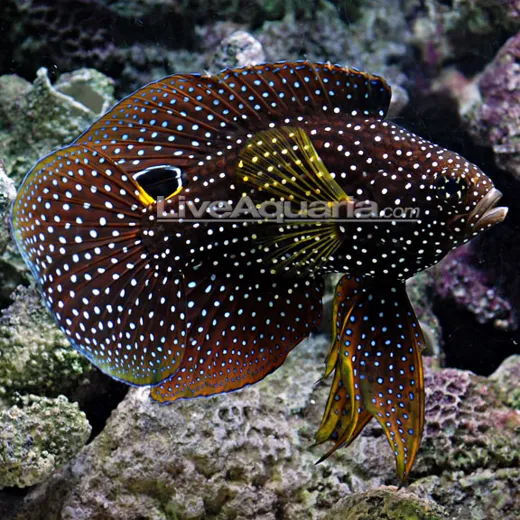
Marine Betta (Comet Betta)
The Marine Betta, also known as the Comet, is native to rocky crevasses at depths up to 45 meters. It is a hardy and disease-resistant species, well adapted to marine environments.
As a natural predator, it adopts a ‘head down’ posture, with a false eye spot near its tail that mimics the head of a moray eel, providing a defensive appearance.
It is generally safe with corals and anemones, though it will prey on small fish and shrimp. This species is nocturnal and prefers dim lighting, becoming active during dusk. It requires hiding spots to feel secure.
When first introduced to the aquarium, live saltwater feeder shrimp are recommended to encourage feeding. Once acclimated, it can be fed meaty foods such as brine shrimp or small fish.
| Key Features |
|---|
| Native habitat: Deep rocky crevasses (up to 45 meters) |
| Behavior: Nocturnal, predatory, requires hiding places |
| Compatibility: Safe with corals and anemones; will eat small fish and shrimp |
| Feeding: Starts with live feeder shrimp; later accepts meaty foods |
FAQ
Is the Marine Betta safe with corals and anemones?
Yes, the Marine Betta is reported to be safe with corals and anemones, though it will eat small fish and shrimp.
What kind of lighting does the Marine Betta prefer?
The Marine Betta is nocturnal and prefers dim lighting. It is more active at dusk and requires hiding places to feel secure under bright lighting.
How should I feed my Marine Betta when it’s first introduced to the tank?
Use live saltwater feeder shrimp to entice the fish to eat. Live foods help it adjust during the initial acclimation period.
Nathan Edmunds –
The Marine Betta is surprisingly hardy and has adapted well to my tank. I started with live shrimp, and after a week it began eating regularly. It’s active at night and hides well in the rockwork. No issues with corals so far.
Gavin North –
I was cautious about keeping a predator in a reef tank, but this fish doesn’t harm the corals. It’s quiet during the day and only moves at night. Feeding it live shrimp helped it adjust quickly.
Carolyn Morrison –
The false eye spot is fascinating. It looks like a moray eel when it’s resting. I love how it behaves at dusk. It’s not aggressive and only eats small prey, which is great for a reef setup.