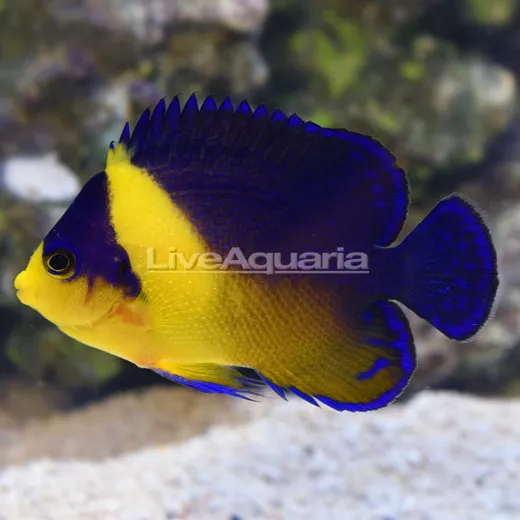
Purple Masked Angelfish (Venustus Angel)
The Purple Masked Angelfish, also known as the Venustus Angel or Blue-backed Angelfish, is a striking addition to any marine aquarium. Its vivid contrast of blue and yellow coloration adds visual diversity and appeal to any tank.
This species requires a minimum 70-gallon aquarium with ample live rock for hiding, as they are naturally shy and prefer structured environments. As they mature, they may become more active and may display assertive behavior toward other fish of similar size and body shape.
While generally considered reef-safe, Purple Masked Angelfish may nip at sessile invertebrates such as clam mantles and soft corals.
Feed a balanced diet including Spirulina, marine algae, mysis, frozen shrimp, and other meaty foods to ensure optimal health and coloration.
| Specifications |
|---|
| Species: Purple Masked Angelfish (Venustus Angel) |
| Minimum Tank Size: 70 gallons |
| Water Conditions: Stable salinity, moderate temperature |
| Diet: Spirulina, marine algae, mysis, frozen shrimp |
| Behavior: Shy when young, may become more active with age |
| Compatibility: Best with similarly sized, non-aggressive fish |
FAQ
What is the minimum tank size required for a Purple Masked Angelfish?
A minimum of 70 gallons is required, with ample live rock for hiding and shelter.
Is the Purple Masked Angelfish reef-safe?
Generally considered reef-safe, but may nip at sessile invertebrates like clam mantles and soft corals.
What should I feed my Purple Masked Angelfish?
Feed a varied diet including Spirulina, marine algae, mysis, frozen shrimp, and other meaty foods.
Wendy McGrath –
The fish arrived healthy and quickly adapted to the tank. The blue and yellow coloration is very striking. I added plenty of live rock and it’s now a calm presence in the tank. Only noticed it gently nibbled a clam mantle after a few weeks, so I’ve removed that invertebrate. Overall, a beautiful and peaceful addition.
Thomas Payne –
Great color and active when mature. I had to provide a large tank with hiding spots since it was shy at first. Feeding with Spirulina and mysis works well. It’s not aggressive, but I keep it away from smaller invertebrates.
Sonia Cornish –
The fish has been thriving in my 80-gallon tank. The contrast in colors is stunning. I’ve been feeding it a mix of frozen shrimp and algae wafers. It’s become more confident over time and now swims freely. Just a note: avoid placing it near soft corals or clams.