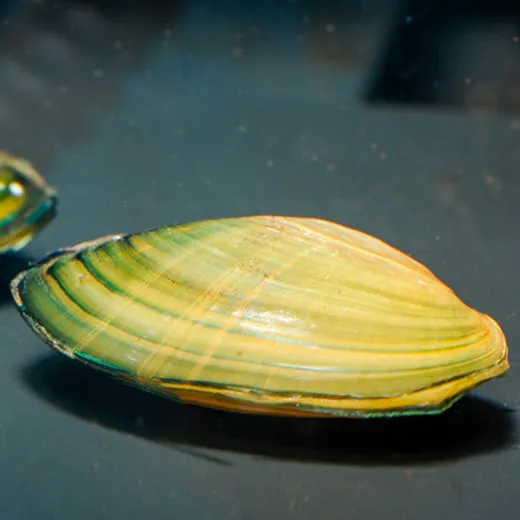
Freshwater Clam by LiveAquaria
The Freshwater Clam is a living filter that helps keep aquarium water clear and clean. By removing uneaten food and detritus from the water column, the Freshwater Clam helps maintain water quality and lower nitrate levels. Like many freshwater bivalves, Corbicual sp. typically buries itself in the substrate. However, spotting its siphon protrude from the substrate is truly captivating to observe. This variety of the Corbiculidae family only reaches a length of about 2″, which makes it a suitable addition to well-established aquariums of almost any size.
Though found in temperate freshwater rivers and lakes around the world, this species originates in Asia and has a brown shell, banded in black. For best care, house the Freshwater Clam in an aquarium of at least 10 gallons with stable water conditions.
| Specifications |
|---|
| Species: Corbiculidae (Corbicual sp.) |
| Shell Color: Brown with black bands |
| Maximum Size: 2 inches |
| Water Conditions: Stable, pH 6.5–7.5, temperature 65–77°F |
| Substrate Requirement: Fine sand or gravel |
FAQ
What is the typical size of the Freshwater Clam?
The Freshwater Clam typically reaches a maximum length of about 2 inches.
Where does the Freshwater Clam originate from?
This species originates in Asia and is found in temperate freshwater rivers and lakes worldwide.
How does the Freshwater Clam help maintain aquarium water quality?
It removes uneaten food and detritus from the water column, helping to reduce nitrate levels and keep water clear.
Jasmine Glover –
Added a few Freshwater Clams to my 20-gallon tank and noticed a visible improvement in water clarity within a week. They hide in the sand but occasionally show their siphon, which is fascinating to watch. The tank feels more balanced now with lower nitrate readings.
Jan Marshall –
The clams are easy to maintain and blend well with the tank environment. I didn’t see any issues with their behavior or health after two months. A nice low-maintenance addition for a planted or natural-looking aquarium.
Megan Henderson –
I’ve had this species for three months now and appreciate how they naturally clean the water without needing filter media. The black and brown shell pattern stands out in the substrate, and they seem active during the day.