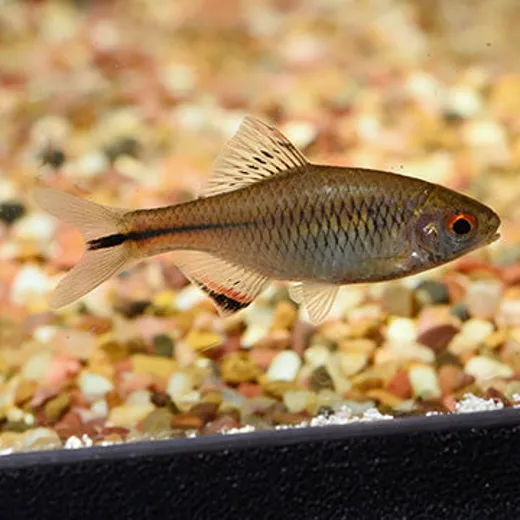
Taiwanese Bitterling
The Taiwanese Bitterling, also known as the Algae Eating Blue Amur or Tanakia Bitterling, has a slight carp-like appearance and is well-suited for both backyard ponds and aquariums. Their body color ranges from silvery-blue to black, with hints of red in the dorsal, anal fins, and eyes. Mature individuals may develop showy coloration, including a pink or blue base at the caudal fin.
An ideal aquarium should be at least 30 gallons in size and include a well-aquascaped environment with plants (real or plastic), rocks offering hiding spots, and a substrate of gravel or sand. These fish are shoaling species and thrive when kept in groups of six or more. Maintaining high water quality is essential for their health and well-being.
| Key Features | Details |
|---|---|
| Size | Up to 4 inches |
| Water Temperature | 65°F to 75°F |
| Water pH | 6.5 to 7.5 |
| Compatibility | Best with non-aggressive species |
| Feeding | Algae, plant matter, and small flakes |
FAQ
What is the ideal tank size for Taiwanese Bitterling?
The ideal aquarium size is at least 30 gallons to provide sufficient space for their active behavior and shoaling needs.
Do Taiwanese Bitterling require specific water conditions?
Yes, they require stable water conditions with a pH between 6.5 and 7.5 and a temperature range of 65°F to 75°F. High water quality is essential for their health.
Can Taiwanese Bitterling be kept with other fish?
They are best kept with non-aggressive species. Avoid keeping with very active or predatory fish that may stress or harm them.
Jonathan Hill –
I added a group of five Taiwanese Bitterling to my 40-gallon tank. They’ve been active and peaceful, cleaning algae from the glass and plants. The color change in their fins after a few weeks was impressive. Easy to care for as long as water quality is maintained.
Benjamin Bower –
The fish are beautiful and active. I kept them in a planted tank with rocks and driftwood. They form a nice school and seem to enjoy the environment. A bit shy at first, but they settled in after a week.
Robert Black –
Great addition to my pond. They swim gracefully and help control algae naturally. I’ve kept them with a few other peaceful fish, and they coexist well. The blue and pink fin base is especially striking in the light.