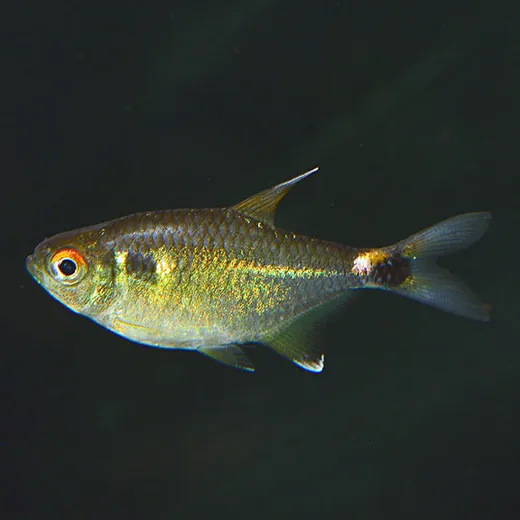
Head and Tail Light Tetra
The Head and Tail Light Tetra originates from the tributaries and rivers of South America and makes a wonderful addition to any community aquarium. Their body is mostly transparent in color with the head and abdomen having a silver to gold coloration. These fish have a pinkish spot both on the base of the tail, and just behind the eyes, which gives them their name.
The Head and Tail Light Tetra can be housed in an aquarium with other soft water fish. Tetras are a schooling fish that work well in groups of six or more fish of the same species. Live plants, rocks and driftwood help to enhance its natural habitat and provide hiding spaces.
Head and Tail Light Tetras breed occasionally in an aquarium setting and a hospital or “breeding tank” will be necessary. During breeding time, the fish may become more active and display increased interest in spawning areas.
| Specifications |
|---|
| Species: Head and Tail Light Tetra |
| Origin: South American rivers and tributaries |
| Water Type: Soft water |
| Group Size: 6 or more fish |
| Temperature Range: 72–78°F |
| Compatibility: With other soft water community fish |
FAQ
What is the ideal group size for Head and Tail Light Tetras?
Head and Tail Light Tetras are schooling fish and should be kept in groups of six or more for optimal behavior and well-being.
Do Head and Tail Light Tetras require special lighting?
No special lighting is required. Standard aquarium lighting is sufficient to support their natural behavior and appearance.
Can Head and Tail Light Tetras live with other types of fish?
Yes, they can be housed with other soft water community fish, but avoid aggressive or very active species that may stress them.


Alison Skinner –
These tetras are beautiful with their unique silver and pink markings. I kept them in a 20-gallon tank with other peaceful community fish and they swim together in a natural school. The pink spots are very noticeable and add a nice touch to the aquarium.
Heather Dickens –
I’ve had these fish for three months now and they’re active and healthy. They do best in groups, so I made sure to keep at least six. The tank looks more vibrant with them, especially with live plants and driftwood.
Victoria Edmunds –
The coloration is striking, especially the pink spots on the tail and behind the eyes. They’re easy to care for and don’t require much maintenance. I love how they swim in coordinated patterns.