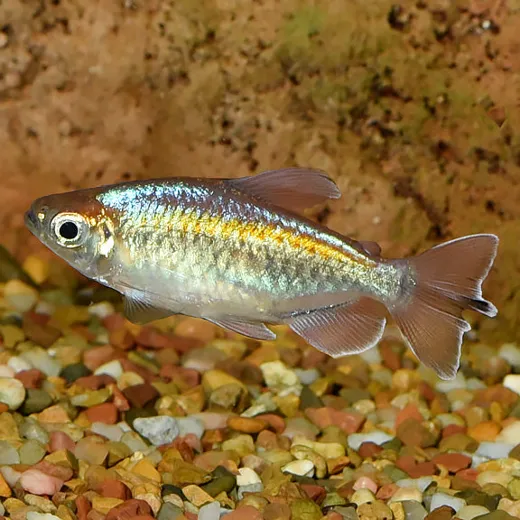
Congo Tetra by LiveAquaria
The Congo Tetra is considered by many to be the jewel of tetras in the home aquarium because of its natural beauty. They have flowing fins that some have described as shimmering and the main color tends to be silver with an orange glow.
Congo Tetras do well in a peaceful community aquarium that is well lit and moderately planted. They prefer to swim in schools of 5-8 in an aquarium that has plenty of room. It is best if this fish is the dominant species in the tank or it may become shy and reclusive.
Congo Tetras are egg layers and because of this you must make sure if breeding to separate the adults from the eggs or the eggs may be eaten. Another consideration is that the eggs of this fish are extremely vulnerable to fungus and the aquarium should be treated accordingly.
| Specifications |
|---|
| Species: Congo Tetra |
| Size: 2.5 inches (6 cm) |
| Temperature: 72–82°F (22–28°C) |
| Water pH: 6.0–7.5 |
| Group Size: 5–8 fish |
| Breeding: Egg layer, eggs vulnerable to fungus |
FAQ
What is the ideal group size for Congo Tetras?
Congo Tetras prefer to swim in schools of 5 to 8 fish. Keeping them in a group of this size helps them feel secure and display their natural behavior.
Are Congo Tetra eggs prone to disease?
Yes, the eggs are extremely vulnerable to fungus. It is important to maintain good water quality and consider using a fungal treatment if breeding is planned.
Do Congo Tetras need special lighting?
Yes, they do well in a well-lit aquarium. Moderate lighting with a clear view of the tank helps enhance their natural color and movement.




Pippa Rees –
I’ve had Congo Tetras for six months now and they are absolutely stunning. Their silver bodies with orange glows make the tank look vibrant. I keep them in a group of six and they swim together in a calm, coordinated way. The tank is well-lit and planted, which suits them perfectly.
Amelia Hudson –
The fish are active and beautiful. I noticed they become shy when kept with more aggressive species. I made sure to keep them as the dominant species in the tank. They thrive in a moderately planted, well-lit environment.
Carl Brown –
I tried breeding them once and had to separate the adults from the eggs immediately. The eggs were very sensitive and developed fungus quickly. I now use a water treatment to prevent that. Overall, a great addition to a peaceful community tank.