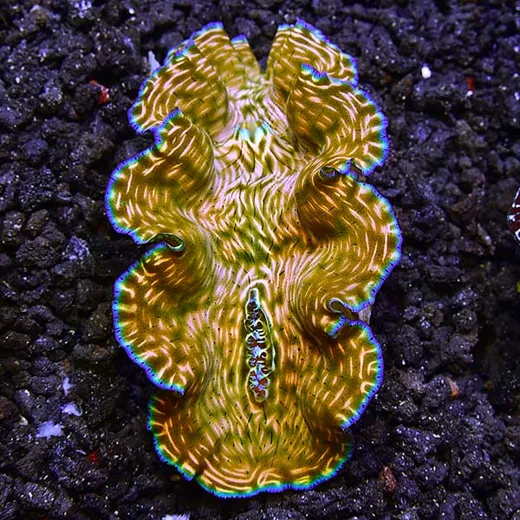
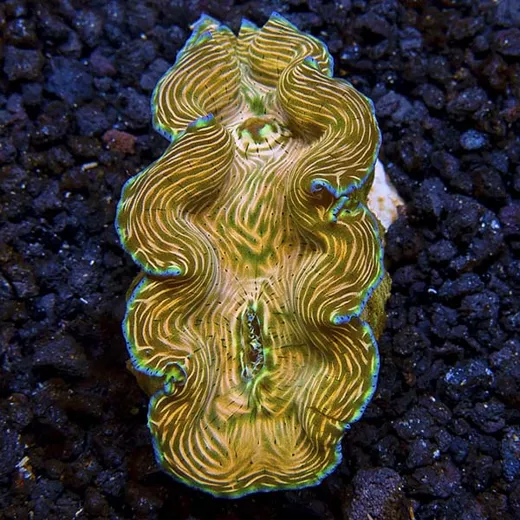
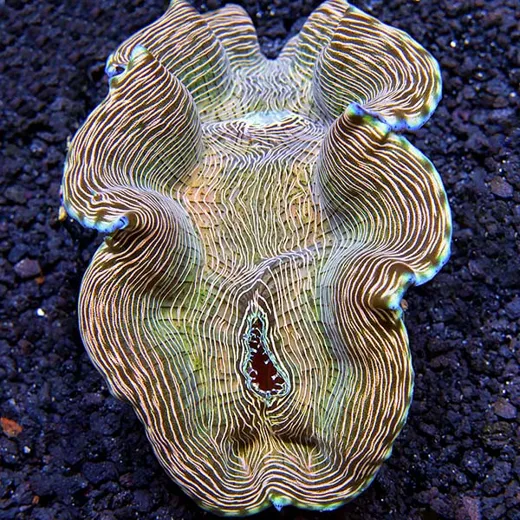
Aquacultured Derasa Clam by LiveAquaria
The aquacultured Tridacna derasa Clam, also known as the Southern Giant Clam or Smooth Giant Clam, is the second largest species within the Tridacna genus, capable of reaching up to 24 inches in the wild. Unlike many other Tridacna species that feature a large byssal opening, Derasa Clams have a narrow gap on the underside of their thick, smooth shell. They are often mistaken for Tridacna gigas, especially when small. T. derasa can be distinguished by having six to seven vertical folds in its shell, which can be fully closed, whereas T. gigas has only four to five folds and cannot fully close its shell.
Smaller Derasa Clams are particularly sensitive to moderate lighting conditions. Proper lighting is essential to support their health and photosynthetic activity.
| Feature | Detail |
|---|---|
| Species | Tridacna derasa |
| Common Name | Southern Giant Clam, Smooth Giant Clam |
| Shell Folds | 6 to 7 vertical folds |
| Byssal Opening | Narrow gap on underside |
| Light Sensitivity | High sensitivity to moderate lighting |
FAQ
How does the Derasa Clam differ from Tridacna gigas?
The Derasa Clam has six to seven vertical folds in its shell and can fully close its shell, while Tridacna gigas has only four to five folds and cannot fully close its hinged shell. Derasa also has a narrower byssal opening.
What lighting conditions are recommended for Derasa Clams?
Derasa Clams are highly sensitive to moderate lighting and require stable, appropriate lighting conditions to thrive. Excessive or fluctuating light can negatively affect their health.
Can Derasa Clams be kept in a home aquarium?
Yes, Derasa Clams can be kept in a home aquarium, but they require careful attention to lighting, water quality, and space due to their sensitivity and size.

Adrian McLean –
The Derasa Clam arrived healthy and looks impressive in my tank. I noticed the six vertical folds clearly visible and it closed completely when touched. I adjusted the lighting to match the recommended levels and it has been thriving since.
Chloe Lee –
It’s a beautiful addition to my reef tank. I was cautious with the lighting at first, but after reducing the intensity, the clam has settled in well. The shell texture is smooth and it looks natural in the environment.
Carl Paige –
I compared it to a T. gigas and the differences in shell folds and closure are clear. It’s a great species for aquarists who want a large, visually striking clam with distinct features.