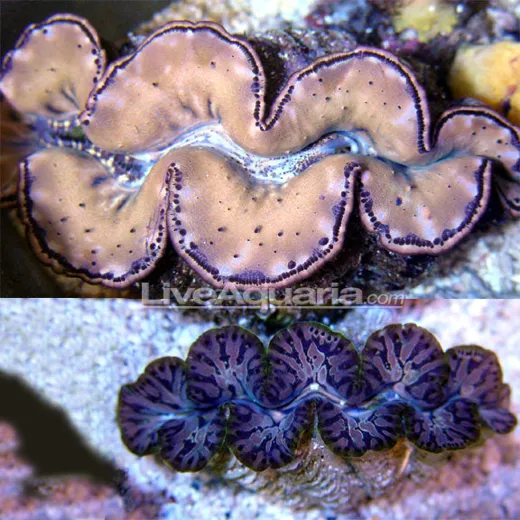
Maxima Clam, Gold
The Maxima Clam is also known as the Small Giant Clam and is one of the most widely recognized species of the giant clams. The beauty of its mantle with its rich variety of patterns and vivid colorations makes for a spectacular display in reef aquariums that are illuminated properly. Maxima Clams are known to live together in great congregations, and they can attain a maximum size of 12″ in the wild.
The vast majority of Tridacna maxima available in the aquarium trade are cultured on land-based clam farms in the Central and South Pacific. Maxima Clams are found in an endless variety of colors and patterns, and these clams are graded for size, their intensity of coloration, and how complex their patterns are.
| Specification | Details |
|---|---|
| Species | Tridacna maxima |
| Size (approx.) | 3″ to 5″ (7.5 to 12.5 cm) |
| Color | Gold |
| Origin | Central and South Pacific |
| Living Condition | Reef aquarium with proper lighting |
FAQ
What makes the Maxima Clam stand out in a reef aquarium?
The Maxima Clam is known for its vivid coloration and intricate patterns on the mantle, which create a striking visual display when properly illuminated in a reef aquarium.
Are Maxima Clams suitable for beginners?
Maxima Clams require proper lighting and stable water conditions, making them more suitable for experienced reef keepers who can maintain optimal tank parameters.
How are Maxima Clams typically sourced for the aquarium trade?
The vast majority of Maxima Clams available in the aquarium trade are cultured on land-based farms in the Central and South Pacific.

Amy Terry –
The gold Maxima Clam adds a stunning visual element to my reef tank. Its color is vibrant and the pattern is unique. It has been thriving for over six months with proper lighting and stable water conditions.
Blake Gray –
I was impressed by how quickly the clam adapted to my tank. The lighting setup I had in place really brings out the gold hues. It’s a beautiful addition to the community.
Anna Henderson –
This clam is a true centerpiece. The pattern is complex and the color stands out even in a busy tank. I’ve kept it for over a year and it’s still healthy and active.