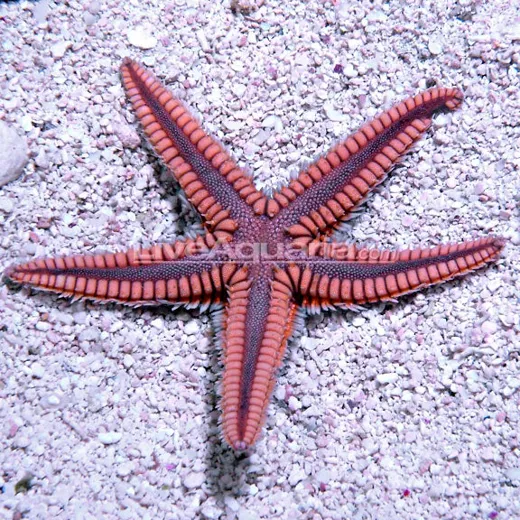
Blue & Pink Sea Star – Expert Only
Though beautifully colored, the Blue and Pink Sea Star is also a useful addition to any established home aquarium. Obviously, this Astropecten species’ most noticeable trait is the bright pink and blues of each arm. But in addition to its exotic colors, this sand sifting starfish is also highly active and mobile. It can sift and aerate large amounts of sand as it burrows into and searches through the substrate for food.
These peaceful omnivores are a great addition to reef aquariums. They will consume detritus and leftover food. Like other starfish, this member of the Astropectinidae family also consumes small invertebrates, including shrimp, urchins, mollusks, bivalves, or other small sea stars. As such, they should be actively fed with a variety of marine foods.
| Species | Astropecten |
|---|---|
| Behavior | Active, mobile, sifts sand and aerates substrate |
| Diet | Omnivorous: detritus, leftover food, small invertebrates |
| Habitat | Reef aquariums, established tanks |
FAQ
What makes the Blue & Pink Sea Star unique compared to other starfish?
Its bright pink and blue arm coloring is distinctive. It is also highly active and mobile, helping to aerate sand and sift through the substrate for food.
Is this species suitable for beginner aquariums?
No, this is an expert-only species. It requires a mature, established aquarium with stable conditions and a well-maintained substrate.
What type of food should I feed this sea star?
Feed a variety of marine foods including detritus, leftover fish food, and small invertebrates like shrimp or bivalves.


Molly Stewart –
Added the Blue & Pink Sea Star to my 50-gallon reef tank after research. It’s vibrant and active, constantly moving through the sand. It helps clean up detritus and small food particles. No issues so far with aggression or health. A nice visual addition.
Leonard Peake –
The colors are stunning. It’s more active than I expected and seems to help with sand aeration. I feed it daily with a mix of sinking pellets and frozen foods. Stable in my tank for over three months.
Abigail Gill –
This sea star has become a regular sight in my tank. It digs through the sand and consumes leftover food, which reduces waste. Very peaceful and doesn’t harm other invertebrates.