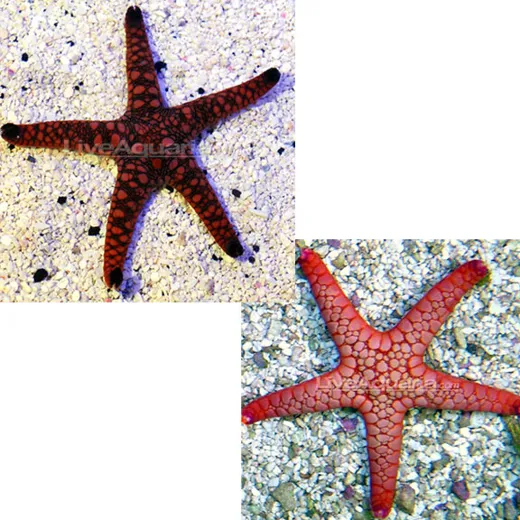
Indian Sea Star (Marble Starfish)
The Indian Sea Star, also known as the Marble Starfish, is a common species from the Fromia genus. It is recognized for its striking patterns and vibrant coloration, ranging from deep red to orange. Both the central disc and the arms are mottled with lighter cream tones, creating a distinctive marbled appearance.
This species is typically found on sandy substrates, rocky areas, and occasionally among corals or other invertebrates. It feeds continuously on micro-organisms and detritus, so the aquarium should include ample live rock to support its foraging habits.
Indian Sea Stars generally live alone, but in sufficiently large tanks, they can coexist with others of the same species.
| Feature | Detail |
|---|---|
| Color Range | Deep red to orange with cream mottling |
| Habitat | Sandy substrates, rocks, and among corals |
| Feeding Behavior | Forages on micro-organisms and detritus |
| Compatibility | Tolerant of same species in large tanks |
| Environmental Sensitivity | Intolerant of sudden changes in water conditions |
FAQ
What is the typical coloration of the Indian Sea Star?
The Indian Sea Star ranges in color from deep red to orange, with a marbled pattern of cream on both the central disc and arms.
Where does the Indian Sea Star typically live in an aquarium?
It is commonly found on sandy substrates, rocky areas, and sometimes among corals or other invertebrates.
How does the Indian Sea Star feed?
It constantly forages for micro-organisms and detritus, so a well-established live rock environment is essential.



Colin Hamilton –
The Indian Sea Star looks stunning with its marbled red and cream pattern. It’s active and adds visual interest to the tank. I made sure to include plenty of live rock for feeding, and it’s been thriving for over six months.
Kylie Forsyth –
Beautiful and unique. The coloration is vibrant and stands out in the tank. It’s peaceful and doesn’t seem to interfere with other inhabitants. Just make sure water parameters are stable.
Theresa Anderson –
I’ve had this sea star for three months now and it’s very healthy. It moves around the rockwork and seems to be eating detritus regularly. The marbled look is very eye-catching.