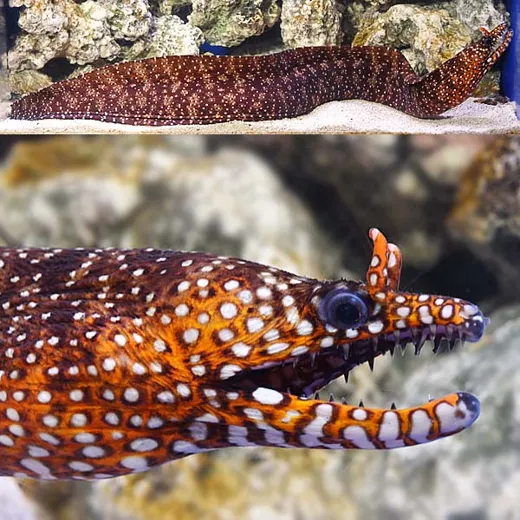
Japanese Dragon Eel
The Japanese Dragon Eel, also known as the Dragon Moray Eel or Dragon Eel, was previously known as Enchelycore pardalis to scientists. It has a mottled orange, black, and white body accented by nostril flares and horns above the eyes giving this creature a menacing appearance.
It requires a 180 gallon or larger aquarium with suitable shelter to conceal itself until it becomes acclimated. In time, it will have its head out in the open or lie out in full view. The aquarium must be equipped with a tight-fitting lid to discourage escape.
The Japanese Dragon Eel diet consists of live feeder fish, squid, and octopus, and may eat the other fish in the tank.
Specifications
| Feature | Detail |
|---|---|
| Scientific Name | Enchelycore pardalis |
| Approximate Purchase Size | 12″ and up |
| Minimum Tank Size | 180 gallons |
| Feeding Requirements | Live feeder fish, squid, octopus |
| Behavior | Shelter-seeking, may consume other fish |
FAQ
What is the minimum tank size required for a Japanese Dragon Eel?
The minimum tank size required is 180 gallons.
What does the Japanese Dragon Eel eat?
It eats live feeder fish, squid, and octopus. It may also consume other fish in the tank.
Does the Japanese Dragon Eel need hiding places in the tank?
Yes, it requires suitable shelter to conceal itself during the initial acclimation period.
Samantha Marshall –
The Japanese Dragon Eel is a striking addition to a large aquarium. It looks impressive with its mottled coloration and distinctive horns. After a few weeks, it started exploring more and became more active. I made sure to provide plenty of hiding spots and a tight lid. It’s a bold choice, but it’s definitely a showstopper in a 180-gallon tank.
Jasmine Scott –
We bought this eel for our large reef tank. It’s very active and curious once it settles in. The feeding is straightforward—live squid and small fish. It does eat other fish occasionally, so we removed a few smaller species. Overall, it’s a unique and fascinating pet.
Victor Mitchell –
The eel arrived healthy and seemed calm at first. It took about six weeks to become fully active. We had to adjust the tank setup to include more hiding spots. It’s not for beginners, but if you have a large tank and can manage the feeding, it’s worth the effort.