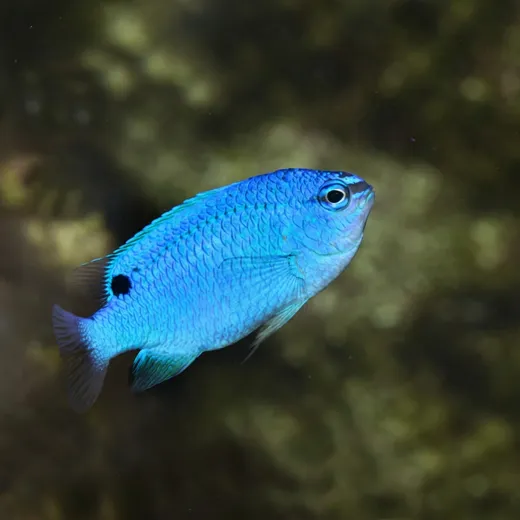
Blue Damselfish
The Blue Damselfish is probably the best selling marine fish in the United States. Beginning hobbyists relish its hardiness and small size, while advanced aquarists praise the color and activity this member of the Pomacentridae family brings to the aquarium. Female Blue Damselfish are completely blue. Males, on the other hand, have an orange tail and are commonly called the Orangetail Blue Damselfish or Blue Devil Damselfish.
Native to reefs across the Indo-Pacific, Chrysiptera cyanea is usually busy defending a small territory. Interestingly, the Blue Damselfish has the ability to hide in a hole or crevice and darken to an almost black color. This usually happens when it is threatened. After the perceived threat is gone, the Blue Damselfish will return to its original color.
| Species | Chrysiptera cyanea |
|---|---|
| Size | 2.5 inches (6.4 cm) |
| Temperament | Aggressive, territorial |
| Water Conditions | Salinity: 1.020–1.025, Temperature: 72–78°F (22–26°C) |
FAQ
What is the difference between male and female Blue Damselfish?
Female Blue Damselfish are completely blue. Males have an orange tail and are often referred to as Orangetail Blue Damselfish or Blue Devil Damselfish.
Can Blue Damselfish hide when threatened?
Yes, the Blue Damselfish can hide in a hole or crevice and darken to an almost black color when threatened. It will return to its original color once the threat has passed.
What is the typical size of a Blue Damselfish?
The typical size of a Blue Damselfish is 2.5 inches (6.4 cm).



Adam Ellison –
The Blue Damselfish is a vibrant addition to my reef tank. The male’s orange tail stands out beautifully, and it’s active enough to keep the tank lively. I noticed it hides in the rockwork when I’m near, which is a cool behavior. It’s easy to care for and has adapted well to the tank conditions.
Mary Hunter –
I bought this fish for my beginner aquarium. It’s hardy and stays active. The color change when it feels threatened is fascinating. I keep a small group of rocks to give it space to defend its territory. It’s not aggressive toward other fish, just territorial with its own space.
Ruth Walsh –
This fish has become a highlight in my tank. The male’s orange tail is striking, and it’s very active. I’ve seen it dart between crevices and even darken when I approach. It’s a great choice for someone looking for a colorful, dynamic marine fish.