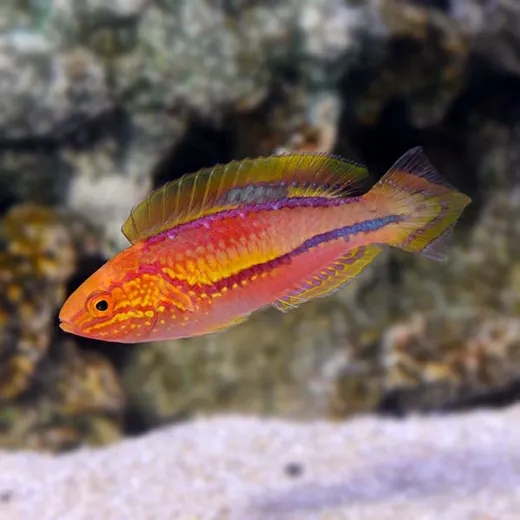
Splendid Pintail Fairy Wrasse
The Splendid Pintail Fairy Wrasse originates from Japan to the Philippines and enjoys the rubble areas of the outer reefs. This peaceful wrasse is a great addition to any reef aquarium adding beautiful pastel colors of pink, yellow and orange. Like other wrasses, the males during courtship will display increased color intensity. Colors may vary depending on the fish’s mood.
The Splendid Pintail Fairy Wrasse is a very peaceful, active fish that will bring both color and activity to a fish-only or reef aquarium of 90 gallons or larger. They will not bother any corals or invertebrates making them a perfect fish for the reef aquarium. A single male can be kept with a group of females that is introduced prior to or at the same time as the male. These wrasses like to jump, so a tight fit is recommended.
| Specifications |
|---|
| Origin: Japan to Philippines |
| Size: Up to 4 inches |
| Water Temperature: 75-82°F |
| Water pH: 8.1-8.4 |
| Compatibility: Peaceful, reef-safe |
| Minimum Tank Size: 90 gallons |
FAQ
What is the typical coloration of the Splendid Pintail Fairy Wrasse?
The fish displays pastel colors of pink, yellow, and orange. Color intensity may increase during courtship in males.
Can this wrasse be kept with corals and invertebrates?
Yes, the Splendid Pintail Fairy Wrasse is reef-safe and will not harm corals or invertebrates.
What is the recommended tank size for this fish?
A minimum tank size of 90 gallons is required for proper health and behavior.

Lucas Baker –
Added a male and three females to my 120-gallon reef tank. The fish are active and colorful, especially during feeding. The males show vibrant colors when they’re happy. No aggression toward corals or other fish. Great addition to the tank.
Claire Poole –
The fish are very peaceful and bring a lot of visual interest. I noticed the color changes when they’re excited, like when food is near. They jump a bit, so I made sure the tank has a secure lid.
Carl Hart –
Perfect for a reef setup. The pink and yellow tones blend well with the live rock. They don’t stress the corals and are easy to observe. I introduced the male with the females at the same time, and they seem to get along well.