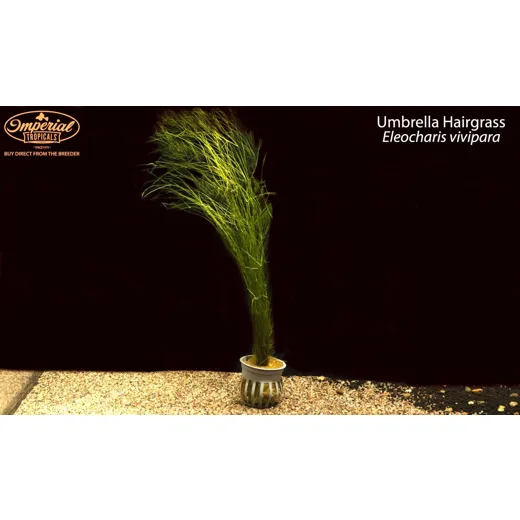
Umbrella Hairgrass (Eleocharis vivipara)
Remarks: Umbrella hairgrass (Eleocharis vivipara) is a unique and lush plant native to the southeastern United States. It is commonly found growing along the edges of shallow ponds, ditches, streams, floodplains, and marshes in the wild. It serves as shelter for fish fry, small crustaceans, and other small aquatic animals.
In the aquarium, umbrella hairgrass is ideal for filling background space. It grows in tall, wispy strands that bend over to form a natural canopy when reaching the water surface. Typically, it grows to 12–16 inches tall in an aquarium, though it can reach up to 20 inches or more under optimal conditions.
| Specifications |
|---|
| Scientific Name: Eleocharis vivipara |
| Native Region: Southeastern United States |
| Growth Height: 12–20 inches |
| Water Type: Freshwater |
| Light Requirement: Moderate to high |
| Hardiness: Generally hardy in aquarium conditions |
FAQ
What is the typical growth height of umbrella hairgrass in an aquarium?
Umbrella hairgrass typically grows to 12–16 inches tall in an aquarium, with potential to reach up to 20 inches under ideal conditions.
Does umbrella hairgrass require special lighting?
It thrives under moderate to high light conditions, which helps promote healthy growth and dense foliage.
Is umbrella hairgrass suitable for use as fish shelter?
Yes, it provides excellent cover for small fish fry and crustaceans, offering natural hiding spots in the aquarium.
Joe Dowd –
I planted umbrella hairgrass in my 20-gallon tank and it has grown steadily over the past three months. The tall, wispy strands create a natural canopy that adds depth and beauty to the background. My small fish use it for shelter, and it looks very natural in the water.
Cameron Davidson –
The plant arrived healthy and has grown well in my aquarium. It doesn’t require much maintenance and spreads nicely without becoming too dense. I appreciate the natural look it adds to the tank.
Carol Hodges –
This hairgrass has transformed my tank’s background. It grows quickly and forms a soft, flowing canopy. I’ve noticed my shrimp using it for hiding, which is a great bonus.