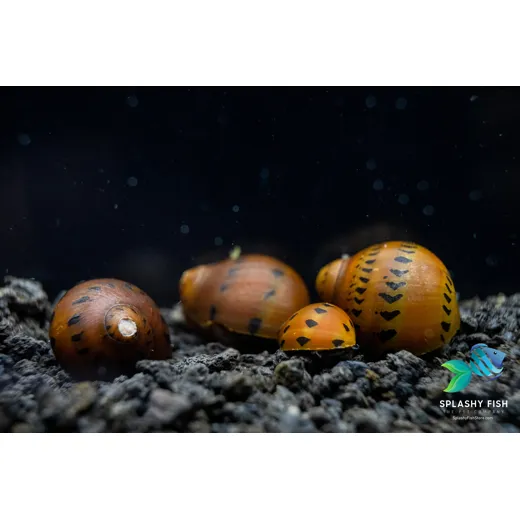
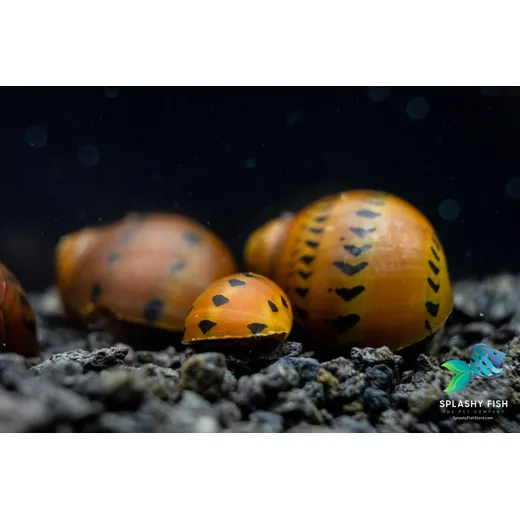
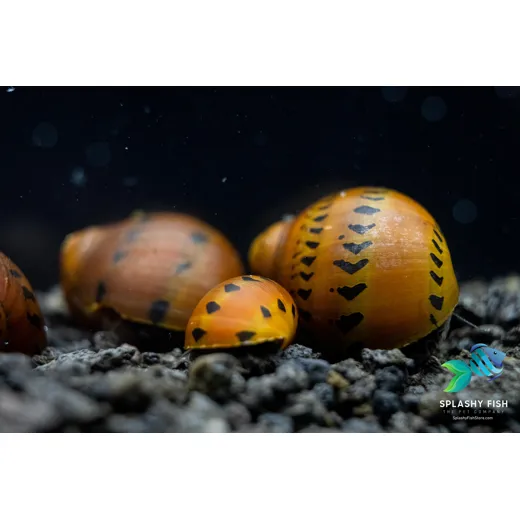
Red Racer Nerite Snails (Vittina waigiensis)
Red Racer Nerite Snails are among the most vibrant and rare nerite snail species in the aquarium hobby. Native to the streams and coastal regions of the Philippines and Indonesia, these snails are best known for their bold racing-stripe shell patterns in striking shades of red, orange, and black. Their compact size (up to 1 inch) makes them perfect for nano and planted tanks, while their hard shells and peaceful nature ensure they’re compatible with a wide variety of freshwater setups. As constant grazers, they are powerful cleaners that remove algae from glass, driftwood, rocks, and leaves—without harming living plants or spiking bioload.
Key Features
| Feature | Detail |
|---|---|
| Species | Vittina waigiensis |
| Size | Up to 1 inch |
| Origin | Philippines and Indonesia |
| Shell Pattern | Red, orange, and black racing stripes |
| Behavior | Peaceful, active grazers |
| Compatibility | Planted tanks, nano setups, freshwater environments |
FAQ
Are Red Racer Nerite Snails safe for planted tanks?
Yes, Red Racer Nerite Snails are safe for planted tanks. They graze on algae without damaging live plants or increasing bioload.
How long does it take for these snails to start cleaning the tank?
They begin cleaning within a few weeks after introduction, as they are active grazers that consume algae on surfaces like glass and driftwood.
Do they require special water conditions?
Please contact customer service
Brandon Rees –
These snails are a stunning addition to my 10-gallon planted tank. The red and black stripes stand out beautifully. They’ve been cleaning algae from the glass and driftwood for over two months without harming my plants. Very peaceful and active.
Nathan Jackson –
I bought a pair for my nano tank. The colors are vivid and they’re very easy to care for. They don’t eat the plants and keep the tank looking clean. Great value for the look and function.
Tim Bond –
The snails arrived healthy and have been active since setup. They’re not aggressive and don’t seem to overpopulate. A bit shy at first, but now they’re exploring the tank regularly.